
House of David Renewed for Season 3- Inside Its Numbers, Its Faith, and Its Blind Spot

House of David's Michael Iskander as David, alongside King Saul, Queen Ahinoam, and the House of Saul in the Prime Video series.
By Sahndra Fon Dufe

Prime Video announced Friday that House of David, its sweeping biblical drama from Wonder Project and Amazon MGM Studios, has been renewed for a third season. Creators Jon Erwin and Jon Gunn confirmed the news in a statement, saying they're "incredibly grateful to fans around the world who have embraced House of David," and that Season 3 "follows David through one of the most defining chapters of his life."
We reported on this show back when it first premiered in February 2025, and the trajectory since then has been hard to miss.
Who's leading it?
The show marks the screen debut of Michael Iskander, an Egyptian-born actor who immigrated to the U.S. as a child, in the title role of David. Before House of David, his only professional credit was Broadway, where he made his debut in Kimberly Akimbo, the production that went on to win the 2023 Tony Award for Best Musical.

His path to the role is worth telling in full, because it's a genuinely remarkable one. Casting took four months and spanned multiple continents, and Iskander, a complete unknown with a single Broadway credit to his name was turned down on his first audition. By his own account, he thought that was the end of it. His representatives later told him he'd gotten a second shot, and from there he found himself doing multiple screen tests from New York to Greece and having lunches with creator Jon Erwin before ultimately landing the role that would become his first-ever on-screen credit. A newcomer with no name recognition, initially told no, going on to headline one of Prime Video's biggest original series and now carrying it into a third season, it's the kind of story that keeps resonating with faith audiences the way it has.His path to the role is worth telling in full, because it's a genuinely remarkable one. Casting took four months and spanned multiple continents, and Iskander, a complete unknown with a single Broadway credit to his name was turned down on his first audition. By his own account, he thought that was the end of it. His representatives later told him he'd gotten a second shot, and from there he found himself doing multiple screen tests from New York to Greece and having lunches with creator Jon Erwin before ultimately landing the role that would become his first-ever on-screen credit. A newcomer with no name recognition, initially told no, going on to headline one of Prime Video's biggest original series and now carrying it into a third season, it's the kind of story that keeps resonating with faith audiences the way it has.
Ali Suliman returns as King Saul, alongside Ayelet Zurer as Queen Ahinoam and Stephen Lang as Samuel, an ensemble that's leaned into the story's Middle Eastern setting with a cast reflecting that region, including Suliman, a veteran Palestinian-Israeli actor with an Oscar-winning film (Paradise Now) already on his résumé.
Kara Smith, head of drama for Amazon MGM Studios, credited the show's staying power directly: "with millions of viewers captivated by the series, we are thrilled to continue this journey with our partners at Wonder Project for a third season."

Faithful to the source material
Part of what's earned House of David its audience is a genuine, visible commitment to getting the story right. Creator Jon Erwin has been direct about the balance he's aiming for: "I do remind people this is not Scripture. This is not the source material. This is a love letter to the source material." Historians, biblical scholars, and rabbis were consulted throughout the writing process, and the production drew inspiration from The Lord of the Rings, Star Wars, and Harry Potter in trying to make the story land for a broad audience, not just a religious one.
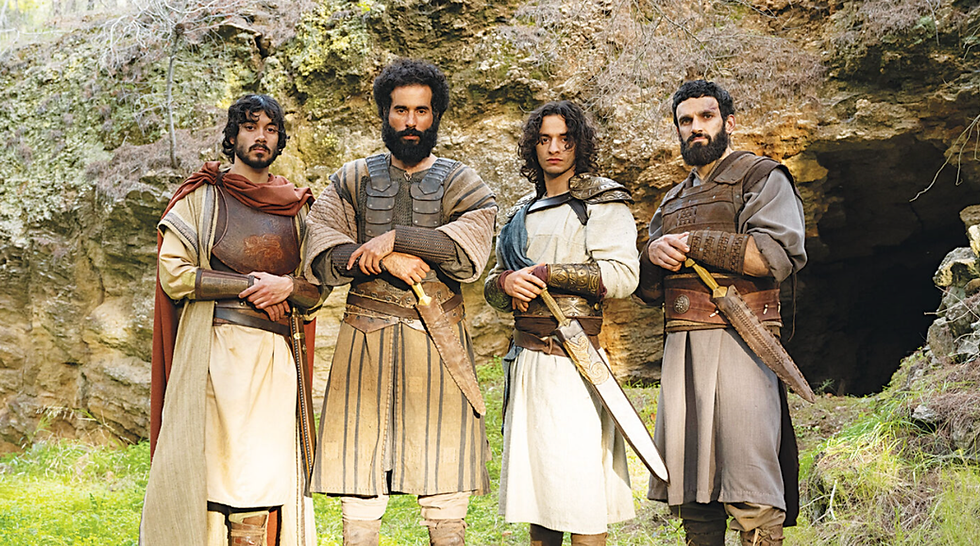
That care has been noticed well beyond the Christian press. Batya Ungar-Sargon of The Free Press called the series "phenomenal," praising its depiction of Jewish tradition and its portrayal of David's world as "an ancient, noble tribe of warrior poets and kings," rather than the flattened, victim-centered framing she felt liberal American media too often defaults to. That's the kind of crossover respect that's hard to manufacture and even harder to sustain across three seasons, and it's a meaningful part of why we're inclined to root for this show doing well.
What's missing from the House of David
That same commitment to historical and geographic authenticity makes one gap harder to look past.
House of David is set in the ancient Levant. Bethlehem and Hebron (both in the modern-day West Bank) and Jerusalem (a city whose modern sovereignty remains internationally contested, though Israel administers it as its capital), all within the world of the ancient Israelites, a Levantine Middle Eastern people, not a Black or Sub-Saharan African one.

But it isn't a story with no basis for it, either: 2 Samuel 18 records a real, textually specific character, an unnamed Cushite messenger, from the Kingdom of Kush in what's now Sudan and Ethiopia, explicitly identified in the text as distinct from the Israelites around him, who runs to tell David the news of Absalom's death, one of the most emotionally significant scenes in David's entire reign. That scene takes place roughly 20 to 30 years later in David's life than where Season 3 currently picks up, well past his years as a hunted outlaw, after he's ruled for decades and is fighting a civil war against his own son. With Season 3 confirmed to cover his years in exile, it will likely be a few more seasons before the show's timeline reaches Absalom's rebellion and the Cushite messenger's scene at all, but it's a real, specific, and currently uncast opportunity worth flagging early for a production that has otherwise made biblical accuracy central to its identity. Reviewers have noted the ensemble so far leans heavily on actors of Middle Eastern and North African heritage, alongside actors like Jonathan's Ethan Kai, who is of Japanese and Chinese heritage. That's a defensible logic for the story's core cast, but it doesn't cover every figure in David's world, and the Cushite messenger is a clear, textually grounded case in point, especially since Samuel's death in the Season 2 finale already shows the production is willing to write out major characters and bring in new named ones as the story moves forward.
But a defensible logic isn't the same as a complete one. For a franchise operating at this scale and budget, reaching for the same visual and narrative ambition as Game of Thrones, per critics, a biblical world with no Black named character at all is worth naming, even if the text itself puts that specific opportunity years away.
According to Black Film Wire, this matters more, not less, precisely because the show is otherwise doing so much right, the same rigor Erwin has applied to language, consultants, and historical staging is exactly what should carry through when the story eventually reaches the Cushite messenger's scene. Season 3 picks up with David still a hunted outlaw, decades before that moment in the narrative: so this isn't a near-term fix so much as a marker worth setting down early, for a show that's shown real care about getting the rest of the details right.
The story so far, and where Season 3 picks up
Season 1, which premiered February 27, 2025, opened with David as an unlikely shepherd boy from Bethlehem, anointed in secret by the prophet Samuel while King Saul's grip on the throne was already unraveling. It led to his defeat of Goliath, the moment the show was built around.
Season 2 picked up in the aftermath, following roughly a year of David's life as he shifted from "giant slayer" to a genuine military and political threat inside Saul's court, while Saul's paranoia deepened and the kingdom edged toward collapse. It ended on its finale, "The Truth Revealed," with Saul's fury erupting into an open assassination attempt on David, forcing him to flee into exile with Mychal's help. The same episode marked the death of the prophet Samuel, in a final meeting with David at Ramah, a significant loss for the show's cast, and for David, who loses his last connection to the man who anointed him. The finale also carried David's parting vow to Jonathan, which the show has flagged will shape how he treats Saul's family later, and, in a smaller but pointed moment, revealed the identity of Abner's long-lost daughterBathsheba, : still offscreen, but clearly being set up for what's coming.
Season 3 continues directly from there. According to creator Jon Gunn, the show has always been built as a three-part arc:
"Season 1 was David the shepherd. Season 2 is David the warrior. Season 3 would be David the king, making his way to the throne."
But the official synopsis makes clear the throne isn't where the season starts: David begins as "a hunted outlaw, forced to hide among his enemies," on the run from Saul before he ever gets there.

New additions for Season 3
Most of the core cast is expected to return: Iskander as David, Ali Suliman as Saul, Ayelet Zurer as Queen Ahinoam, Ethan Kai as Jonathan, and Indy Lewis as Mychal, alongside Eyal Bukobza as Uriah the Hittite and Oded Fehr as Abner.
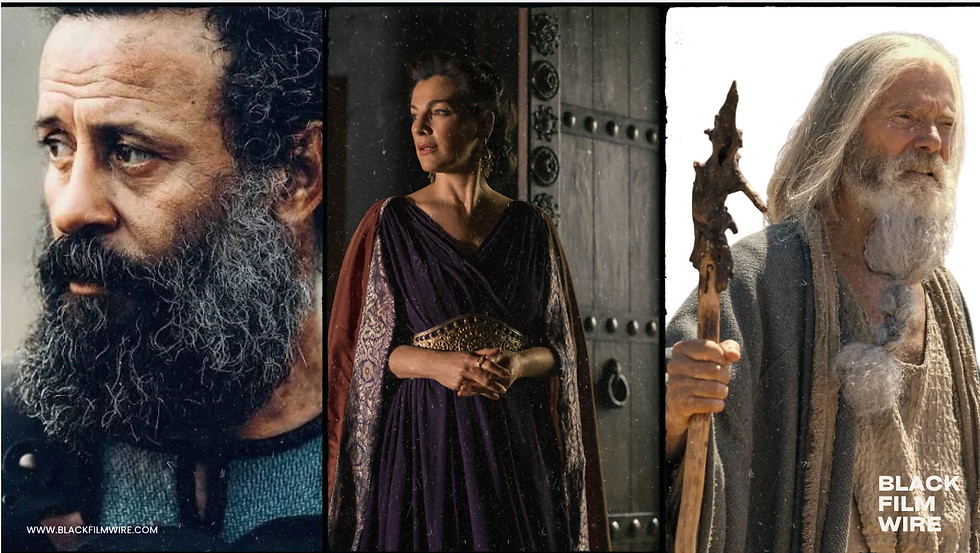
The most significant new addition, according to entertainment trade coverage, is expected to be a series regular cast to bring Bathsheba to the screen for the first time, a character the show has been quietly building toward since that Season 2 name-drop, reportedly setting up a love story between her and Uriah before the more familiar, darker version of that story plays out. No casting has been officially confirmed yet.
The bigger picture: faith-based TV's real numbers
House of David isn't an isolated success; it's part of a broader run of faith-based projects that have quietly outperformed expectations. Season 1 reportedly reached #1 on Prime Video in the U.S. and ranked among the platform's top 10 new series debuts to date, with more than 44 million viewers worldwide. Amazon's willingness to bet on the format in the first place reportedly traces back to the unexpected popularity of another faith-based title, On a Wing and a Prayer, on the platform. That same appetite has fueled Dallas Jenkins' The Chosen (Jenkins is also a shareholder and advisor to Wonder Project, the studio behind House of David) and Kingdom Story Company's Ordinary Angels, a genuine, multi-title wave rather than a one-off hit.

Critics have leaned into the comparison you'd expect: one review described House of David's Season 2 battle sequences and scale as a kind of "inverted Game of Thrones," the same sweeping, big-budget visual language, pointed at very different thematic ends. That's not a small claim for a genre that, until recently, was mostly associated with lower-budget, made-for-TV-movie production values.
There's also a demographic shift underneath the numbers worth noting: industry reporting on faith-based film and TV points to Gen Z men now outnumbering women in church attendance in the U.S., a reversal of the demographic the genre was traditionally built around, and one that's pushing faith-based projects further into adventure, war, and epic-scale storytelling rather than the more domestic drama the genre used to lean on.
On the audience-engagement side, it's worth noting that YouVersion's Bible App, which crossed 1 billion downloads as of late 2025 hosts an official House of David video companion collection alongside its Scripture content, a direct partnership between the show and one of the largest Bible engagement platforms in the world. We don't have season-specific download data tying a spike directly to either premiere, and we'd caution against overstating a causal link that hasn't been publicly reported, but the partnership itself is a real, concrete signal of how closely this show is tied to religious engagement platforms, not just entertainment metrics.
Why we're watching this one

Faith-based television has quietly become one of streaming's more reliable bets, and House of David's numbers are part of a broader pattern worth tracking: big-budget, historically rooted epics with global appeal keep outperforming expectations, season over season, in a genre that was written off as a niche play a few years ago. For a platform like ours that pays close attention to what gets greenlit and why, a renewal built on real retention data, not just a single strong premiere, is the kind of signal that shapes what studios fund next.
House of David Seasons 1 and 2 are streaming now on Prime Video. Season 3 does not yet have a premiere date.
Suggested Reading
House of David: Epic Biblical Drama Premieres on Prime Video | |
From Donald Glover to House of David: Kara Smith Is Amazon MGM's New Head of Drama |


keonhacai5 mình thấy bạn bè nhắc hoài nên cũng ghé thử cho biết, chủ yếu xem giao diện có dễ dùng không thôi. Vừa vào là thấy trang làm khá gọn, khoảng trắng vừa đủ nên nhìn không bị bí. Mình lướt một vòng thì thấy họ chia nội dung thành từng khối rõ ràng, kéo xuống tới đâu hiểu tới đó, không phải căng mắt tìm. Cái mình thích là menu đặt ngay chỗ dễ thấy, bấm qua lại giữa mấy mục cũng nhanh, không bị rối hay load lâu. Mấy phần thông tin dạng cột nhìn khá “thẳng hàng”, kiểu liếc cái là nắm được ý chính, không bị loạn chữ. Nói chung trải nghiệm lướt nhanh ổn,…
Bài viết này rất dễ hiểu, cảm ơn bạn đã chia sẻ. Mình cũng hay theo dõi thống kê XSMB mỗi ngày để nắm xu hướng. Vì cần tra cứu nhanh, mình tự gom dữ liệu lại thành một trang tổng hợp để xem cho tiện. Ai quan tâm dữ liệu cập nhật theo ngày thì ghé xem thử https://hashnode.com/@soicauxsmbpro