
She Holds Both Trophies: Linda Ejiofor-Suleiman Makes History at AMVCA 12 And African Fashion

How a Single Actress Winning Both Lead and Supporting Acting Honours in One Night Produced What May Be a Global First, while Nigeria's Designers Quietly Out-Conceptualised the Met
By Sahndra Fon Dufe, Editor-in-Chief | Black Film Wire, Atlanta GA
May 10, 2026

There is a moment at the end of a great awards season when something tips over from celebration into significance. Last night at the Eko Hotel and Suites in Lagos, at the 12th Africa Magic Viewers' Choice Awards, we had one of those moments: and we almost missed it in the noise of the red carpet conversation, which this year was louder than ever for very good reason. Let me get to the floor story first, because fashion deserves its own reckoning.
When Lagos Outpaces the Met Gala
The 2026 Met Gala, themed "Fashion Is Art" concluded just days before AMVCA weekend. The internet had its takes. Some extraordinary looks. Some expensive-but-safe ones. And then, as has been happening increasingly over the past several years, social media pivoted its gaze to Lagos.
Because the question people were quietly asking, then loudly posting, was: did the AMVCA red carpet just outperform the Met?

Looking at what landed on that carpet at Eko Hotel, this cycle spanning the Cultural Night at the Balmoral Convention Centre and the main ceremony, that question is not as provocative as it sounds. It is a legitimate creative conversation about where the most daring, most concept-driven fashion is being produced right now, and the answer is increasingly: in African ateliers.
Veekee James has been the undisputed architect of the most viral AMVCA looks of recent memory. Her work across multiple high-profile appearances, including Osas Ighodaro's conceptual towel-inspired gown.

Mamadi Couture gave us Doyin David's now-legendary tree dress: a piece that went viral globally and raised the fundamental question the Met Gala theme was trying to answer: can a garment be a sculptural argument? Yes. It already happened. In Lagos.

Amy Aghomi's crystal-encrusted "Water and Diamond" creation on Mercy Eke described by those at the event as looking like light had literally been sewn into the fabric and Lawson Artistry's garden fantasy for Jenni Frank are both pieces that would have moved through a Met Gala crowd with the same arrested attention. The AMVCA's Cultural Night, where attendees arrived in richly detailed traditional attire, coral beads, regal headpieces, and dramatically embroidered cultural ensembles, added yet another dimension: African fashion as a living archive, not just runway provocation.


These are not approximations of international fashion language. They are a distinct fashion language rooted in African craft traditions, amplified by Nigerian theatrical ambition, and executed with the kind of couture-level technical precision that the global industry is only beginning to fully acknowledge.
The AMVCA has become, quietly and then all at once, one of the most important fashion events in the world. Not "important for Africa." Important, full stop.
A Night of Records, and One that Stopped the Room
We at Black Film Wire were tracking the results live, and by the time the acting categories arrived, we had already clocked what a strong and broadly distributed night it was for African storytelling across the continent.
Akinola Davies Jr. winning Best Director and Best Movie for My Father's Shadow was, we will be honest, not a surprise and it wasn't meant to be. The Nigerian-British co-production became the first Nigerian film in official Un Certain Regard selection at Cannes and took home the Outstanding Debut by a British Writer, Director or Producer prize at this year's EE BAFTA Film Awards. Davies Jr. arriving at the AMVCA with that momentum and those films behind him was a story already written. The AMVCA endorsing it is the institution doing what it does well: affirming excellence it would have been conspicuous to ignore. My Father's Shadow is a genuinely important film and a double win for it felt correct. Sometimes the consensus is correct.

More refreshing, and more personally gratifying to acknowledge: Uche Montana receiving the Trailblazer Award is exactly the kind of recognition this ceremony is positioned to give that other ceremonies have not yet learned to give. Montana has been building something specific and consistent, a body of work and a public presence that refuses to be easily categorised, always slightly ahead of the room she is in. The Trailblazer Award, when it lands right, names something the industry can feel but hasn't yet formalised. This one landed right.

Uzor Arukwe and Bucci Franklin, two wins we were rooting for:
Uzor Arukwe winning Best Lead Actor for Colours of Fire is, for many of us, a long time coming. This is a performer who has been delivering consistently, quietly, without the noise his talent warrants for years. His most recent proof point came not in a cinema but on YouTube: Love In Every Word, Omoni Oboli's romantic drama co-starring BamBam, crossed 30 million views on the platform and became the most-streamed Nollywood film in YouTube history, with Arukwe as its lead. The Nigerian Presidency specifically acknowledged the film's cultural impact. And yet the big-stage recognition stayed slow. Colours of Fire changed that. The flowers are finally here.

Bucci Franklin taking Best Supporting Actor for To Kill A Monkey was another one we were quietly rooting for, and the reasons are harder to put into a single sentence which is, fittingly, the nature of what he does. Franklin belongs to a rare category of actor whose presence physically changes the air in a scene. Every hair on the back of your neck. The kind of contained, coiled energy you associate with a certain type of Marvel antagonist, not the loud ones, the ones who smile. The industry has known this for a while. It is good to see the trophy agree.
But then the room shifted.

Best Supporting Actress: Linda Ejiofor-Suleiman The Herd.
The applause was genuine, warm. She is a deeply respected performer. She had been here before: she won Best Supporting Actress at the 2015 AMVCA for The Meeting, an announcement that placed her firmly among Nollywood's most compelling talents. A decade-plus later, she returns not in a secondary role in the conversation, but as one of the evening's most-nominated performers across two separate productions.

Then, minutes later:

Best Lead Actress: Linda Ejiofor-Suleiman The Serpent's Gift.
The room understood what had just happened before it was even named. According to Black Film Wire's own research, confirmed across AMVCA records going back to the inaugural 2013 ceremony, no performer in the history of this awards body has ever won both Best Lead Actress and Best Supporting Actress in the same edition. That is the local record. But the more we looked into the global context, the more remarkable the achievement appeared.
Who Is Linda Ejiofor-Suleiman, And When Did We First See Her at AMVCA?
She is 39 years old, born Linda Ihuoma Ejiofor on July 17, 1986, in Lagos. Her roots are Igbo specifically from Isuikwuato in Abia State, in southeastern Nigeria. She attended Federal Government Girls' College in Onitsha before reading Sociology at the University of Port Harcourt, which means she arrived at acting not through a performing arts track but through a social sciences one a detail that, in retrospect, tracks perfectly with the kinds of roles she gravitates toward: women inside systems, navigating structures larger than themselves.
Her entry point into Nigerian cultural consciousness was Tinsel, the long-running M-Net soap opera she joined in 2009, playing the ambitious and mercurial Bimpe Adekoya. It was a role that made her a household name on Nigerian television before the phrase "Nollywood actress" carried the weight it now does. She transitioned to film with The Meeting (2012) which starred Rita Dominic and announced Linda, even in a supporting capacity, as someone worth watching. The Sun Nigeria named her one of the ten fastest-rising Nollywood stars of 2013. She has since built a filmography spanning comedy, drama, crime, and social thriller: A Soldier's Story, Ojukokoro, Knockout Blessing, 4th Republic, the Chief Daddy franchise, Shina (2024), and now The Serpent's Gift and The Herd the two films that brought her to this moment.
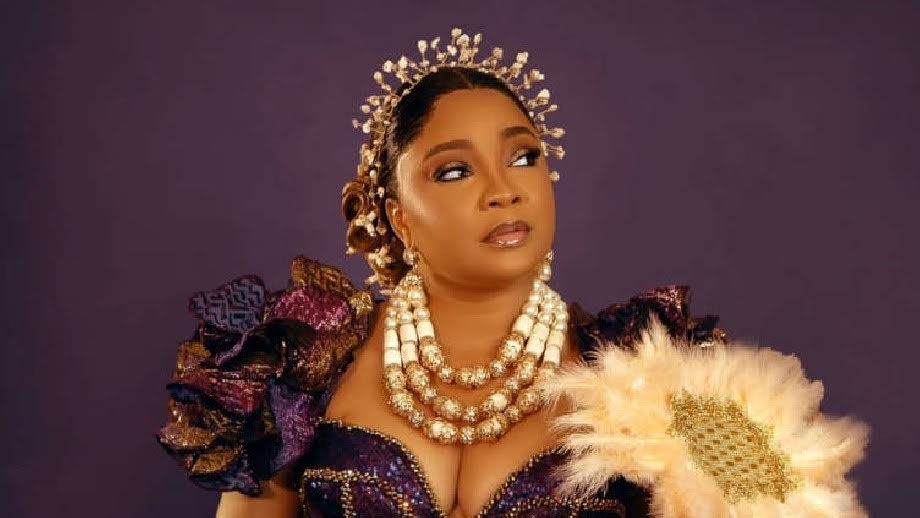
At AMVCA specifically, her record is tighter and more deliberate than the breadth of her career might suggest. She first won here in 2015 Best Supporting Actress for The Meeting. It was her first AMVCA win and, until last night, her only one. Eleven years passed between that 2015 trophy and AMVCA 12 eleven years during which she accumulated nominations at other bodies: the Africa Movie Academy Awards (AMAA) recognised her for The Meeting (2013), Out of Luck (2016), Knockout Blessing (2019), 4th Republic (2020), and again in 2025 for The Serpent's Gift. But the AMVCA, the ceremony that gave her first major recognition, waited more than a decade to see her return and when she did, she took everything.
The Historical Record: What We Found
We pulled the international precedent on dual lead/supporting acting wins at major screen-award ceremonies. What the record reveals is a consistent pattern at the Oscars, BAFTA, SAG Awards, and Golden Globes: performers have been nominated in both categories in the same year but winning both has, as far as we can determine, never happened at any of those major bodies.
The names most often cited in this conversation: Fay Bainter at the 1938 Academy Awards (who won Supporting Actress but lost Best Actress for White Banners); Teresa Wright at the 1942 Oscars (Supporting win for Mrs. Miniver, Lead nomination for The Pride of the Yankees); Jessica Lange at the 1982 Oscars (Supporting win for Tootsie, Lead nomination for Frances); Sigourney Weaver in 1988 (nominated in both categories for Gorillas in the Mist and Working Girl, won neither acting prize); Holly Hunter and Emma Thompson, both double-nominated in 1993. All of them were in the conversation across both tiers. None of them won both.

Even at the Academy Awards, an institution nearly a century old: the dual acting win in a single year has not been accomplished. There have been performers who swept an entire awards season for a single role, picking up the same trophy repeatedly across different ceremonies. There have been double nominations. But winning both lead and supporting acting awards, for two separate performances, at the same ceremony? The record, across all major global screen-award bodies appears to be essentially blank.
For the social media framing of this story: across every major ceremony where this was theoretically possible, actresses have been nominated in both lead and supporting categories repeatedly, going back decades. At the Oscars alone, the list of double-nominated performers runs from the 1930s to the present. Nobody, as far as we can confirm, has won both in the same year. Linda Ejiofor-Suleiman did it last night in Lagos. She may be the first performer globally, at any major ceremony, to have achieved it.
The Performances Behind the History
It is worth pausing on what she won for, because the historical significance should not flatten the specific work.
In The Serpent's Gift, directed by Winifred Mena-Ajakpovi, a film recognised in the Best Indigenous Language Film (West Africa) category at this same ceremony, Ejiofor-Suleiman carried a lead role that critics described as grounded and culturally precise, anchoring a narrative that placed significant dramatic weight on her individual presence throughout.
In The Herd, Daniel Etim Effiong's debut feature, a crime thriller built around the abduction of a post-wedding convoy by bandits disguised as cattle herdsmen, she plays Adamma, the wife left behind when her husband is taken captive. She is managing a recurrent cancer diagnosis while simultaneously trying to raise a ₦50 million ransom. The role operates in a register that could easily tip into melodrama; by all accounts, it does not. Critics who reviewed The Herd specifically cited her performance as one of the most precisely calibrated in the film, showing the weight of a woman holding everything together from the outside of a crisis she cannot control.
These are not two similar performances. They operate in different registers, different genres, different emotional territories. That she was not just nominated but won in both categories, for two distinct performances, is the acting story of this AMVCA cycle and, we would argue, one of the acting stories of the year globally.
What the Films Say: A Thematic Reading
It is worth situating Linda's winning performances against those of the other actresses in the conversation, both at the AMVCA and in the broader global comparison.
The Oscars' most famous dual nominees: Fay Bainter, Teresa Wright, Jessica Lange, Sigourney Weaver were recognised for films that, while accomplished, largely operated within established Hollywood genre frameworks: period family dramas, wartime narratives, prestige biopics, workplace comedies. The roles were often about individual women navigating personal circumstances. What Linda Ejiofor-Suleiman won for is distinctly different in register. The Serpent's Gift is rooted in Igbo cultural inheritance, grief, land, and the weight of ancestral truth on a young widow's body. The Herd is a film about Nigeria's insecurity crisis refracted through the experiences of a woman confronting the Osu caste system at her most vulnerable moment, simultaneously fighting a failing bank, indifferent in-laws, and a ransom deadline while managing a cancer recurrence. These are not films about women in private struggle. They are films about women whose private struggle is inseparable from collective, structural, political reality. The fact that the AMVCA recognised both across two different genres, two different tones, two entirely different sets of cultural stakes says something about where the most sophisticated acting work in African cinema is currently being done, and about the specific intelligence Linda brings to it.
Five Years at the Top: Is There a Pattern?
Looking at the last five Best Lead Actress and Best Supporting Actress winners at the AMVCA, a clear thematic thread emerges and Linda's double win sits squarely within it while also pushing it further than it has gone before.
Best Lead Actress last five editions:
AMVCA 8 (2022): Osas Ighodaro Rattlesnake: The Ahanna Story (crime/survival)
AMVCA 9 (2023): Osas Ighodaro Man of God (religious drama)
AMVCA 10 (2024): Kehinde Bankole Adire (intimate personal drama)
AMVCA 11 (2025): Chioma Chukwuka-Akpotha Seven Doors (supernatural historical drama, a queen navigating a cursed monarchy)
AMVCA 12 (2026): Linda Ejiofor-Suleiman The Serpent's Gift (cultural inheritance, grief, truth)

Best Supporting Actress in the last five editions:
AMVCA 8 (2022): Omowunmi Dada Country Hard (social realism)
AMVCA 9 (2023): Efe Irele Four Four Forty Four
AMVCA 10 (2024): Genoveva Umeh Breath of Life (thriller)
AMVCA 11 (2025): Mercy Aigbe Farmer's Bride
AMVCA 12 (2026): Linda Ejiofor-Suleiman The Herd (insecurity thriller/social drama)
The pattern is unmistakable: the AMVCA jury has consistently rewarded performances in films that are rooted in specific African: and often specifically Nigerian social and cultural realities. Not genre for its own sake. Not prestige for the sake of prestige. Films with something to say about how people live, survive, and hold themselves together inside structures that are often indifferent or hostile. Osas Ighodaro's back-to-back wins, Kehinde Bankole's recognition for Adire, Chioma Chukwuka in the historical weight of Seven Doors all of these fit the same profile.
What Linda does in 2026 is win twice within that same value system, for two films that sit at opposite ends of its emotional register: one intimate and ancestral, one urgent and contemporary. The jury, in effectively doubling down on her work, has made the most explicit statement yet about what they believe the best African screen performance currently looks like. It looks like specificity. It looks like cultural intelligence. It looks like exactly what Linda Ejiofor-Suleiman delivered across two entirely different productions in a single year.
12th Africa Magic Viewers' Choice Awards May 9, 2026, Eko Hotel and Suites, Lagos Hosted by Bovi Ugboma and Nomzamo Mbatha | Head Judge: Joke Silva
Best Costume Design Valerie Okeke, Colours of Fire
Best Makeup Adeola Thelma Bamgboye, Lisabi: A Legend Is Born
Best Art Direction Ajamolaya Bunmi, Colours of Fire
Best Sound/Sound Design Pius Fatoke & CJ Mirra, My Father's Shadow
Best Cinematography Kabelo Thathe, To Kill A Monkey
Best Editing Daniel Anyiam, To Kill A Monkey
Best Score/Music Duval Timothy & CJ Mirra, My Father's Shadow
Best Writing (TV Series) Annette Shadeya, Natasha Likimani, Mkamzee Mwatela, Arnold Mwanjila & Makgano Mamabolo, MTV Shuga Mashariki
Best Writing (Movie) Wale Davies, My Father's Shadow
Best Digital Content Creator Emmanuel Kanaga & Sophia Chisom, Leave To Live
Best Documentary Shedrack Salami, Beyond Olympic Glory
Best Short Film Orire Nwani & Josh Olaoluwa, Hussainin
Best Indigenous Language Film (West Africa) Lateef Adedimeji, Lisabi: A Legend Is Born
Best Indigenous Language Film (East Africa) Leul Shoaferaw, Addis Fikir
Best Indigenous Language Film (South Africa) Naledi Galane, Promise Ramoroka, Ernest Ramoroka & Modipadi Mokgohioa, Tlhaho Ya Mosadi
Best Indigenous Language Film (Central Africa) Kang Quintus, Mabanda
Best Indigenous Language Film (North Africa) Mohamed Awad & Mohamed Abdulraham Eldouma, Artal Alhanin: Our Memories
Best Indigenous M-Net Original Siphosethu Tshapu, Thandi Ramathesele & Yolanda Ndhlovu, Inimba
Best Scripted M-Net Original Femi D. Ogunsanwo, The Low Priest
Best Scripted Series Siphosethu Tshapu, Thandi Ramathesele & Yolanda Ndhlovu, Inimba
Best Unscripted Series Sulaiman Kassim & Anneke De Ridder, Nigerian Idol (Season 10)
Best Supporting Actor Bucci Franklin, To Kill A Monkey
Best Supporting Actress Linda Ejiofor-Suleiman, The Herd
Best Lead Actor Uzor Arukwe, Colours of Fire
Best Lead Actress Linda Ejiofor-Suleiman, The Serpent's Gift
Best Director Akinola Davies Jr., My Father's Shadow
Best Movie My Father's Shadow Funmbi Ogunbanwo & Rachel Dargavel
Trailblazer Award Uche Montana
Industry Merit Award Sola Sobowale & Kanayo O. Kanayo

Why This Night Matters Beyond the Trophy Count
The AMVCA, now in its 12th year, has matured into something that requires a different critical framework than it did at its 2013 inaugural. It is no longer sufficient to cover it as a regional celebration. The ceremony is now a legitimate barometer of one of the world's most productive, most commercially significant, and most narratively diverse film and television industries one that produced a BAFTA-recognised debut, a Cannes Un Certain Regard selection, a ₦2.1 billion domestic box office hit, and a catalogue of work that increasingly finds international distribution and critical attention.
The introduction this year of Best Indigenous Language Film categories for both North Africa and Central Africa for the first time in the ceremony's history reflects an institution growing into its continental mandate rather than simply its Lagos-centred one. Thirty-two categories, spanning jury-decided and public-voted outcomes, across film, television, digital content, documentary, and short form. That breadth is not administrative. It is a statement of scope.
Linda Ejiofor-Suleiman's double win lands at the intersection of all of this a night when African cinema's biggest ceremony produced what may be a genuinely global first in screen-award history, on the same evening that African fashion made a legitimate argument for international creative primacy, during a week when the continent's designers were being compared, favourably, to the world's most storied fashion houses.
According to Black Film Wire
According to Black Film Wire, Ejiofor-Suleiman's double win exposes a familiar gap in how African screen performance is tracked and archived globally: the record is made in Lagos on a Saturday night, celebrated across the continent by Sunday morning, and largely absent from the international trade conversation by Monday. The performers who build careers across television, digital, and film over a decade before a single headline-grabbing night are the ones the archive most consistently fails and the ones, it turns out, most likely to make history when the room finally pays attention. We are confident Linda’s historic win is the story of AMVCA 12. We noticed. We think the broader industry should too.
LINDA EJIOFOR: KEY FILMOGRAPHY- IMDb
Editor's Note
At AMVCA 12, one actress won Best Lead and Best Supporting in the same night: a feat with no confirmed precedent at any major screen-award ceremony in the world. Black Film Wire went looking for the record. This is what we found.
This piece was filed from Lagos, Nigeria, on the night of May 9, 2026, following the 12th Africa Magic Viewers' Choice Awards ceremony at the Eko Hotel and Suites. Historical research on global lead and supporting acting award precedents was conducted by the Black Film Wire editorial team in the hours immediately following the ceremony. Winners' data has been cross-referenced across multiple Nigerian trade and entertainment sources. The article has been edited for clarity and structured to prioritise industry analysis over event recap, in alignment with Black Film Wire's editorial standards for trade-facing awards coverage.
Sahndra Fon Dufe is Editor-in-Chief of Black Film Wire.
Further Reading & Reference
On The Herd: Daniel Etim Effiong's feature directorial debut which earned nine nominations at AMVCA 12, the most of any title this cycle, and produced the historic Linda Ejiofor-Suleiman Supporting Actress performance is essential viewing for anyone tracking the current ambition level of Nigerian genre filmmaking. The film stars Daniel Etim Effiong, Linda Ejiofor-Suleiman, Kunle Remi, Genoveva Umeh, Mercy Aigbe, Deyemi Okanlawon, Tina Mba, Lateef Adedimeji, Amal Umar, and Blessing Jessica Obasi. Black Film Wire will be publishing an extended feature on The Herd the production, the performances, and what its AMVCA 12 showing signals for the next chapter of Nigerian thriller cinema. Watch this space.
Sources: Africa Magic / MultiChoice official AMVCA 12 results; TVC News full winners list (May 9, 2026); Punch Newspapers; BellaNaija; Vanguard; historical acting nominations data via Academy of Motion Picture Arts and Sciences records.


Comments