
I Thought I Was Covering a Film Festival. Instead, I Found a Conversation About Identity
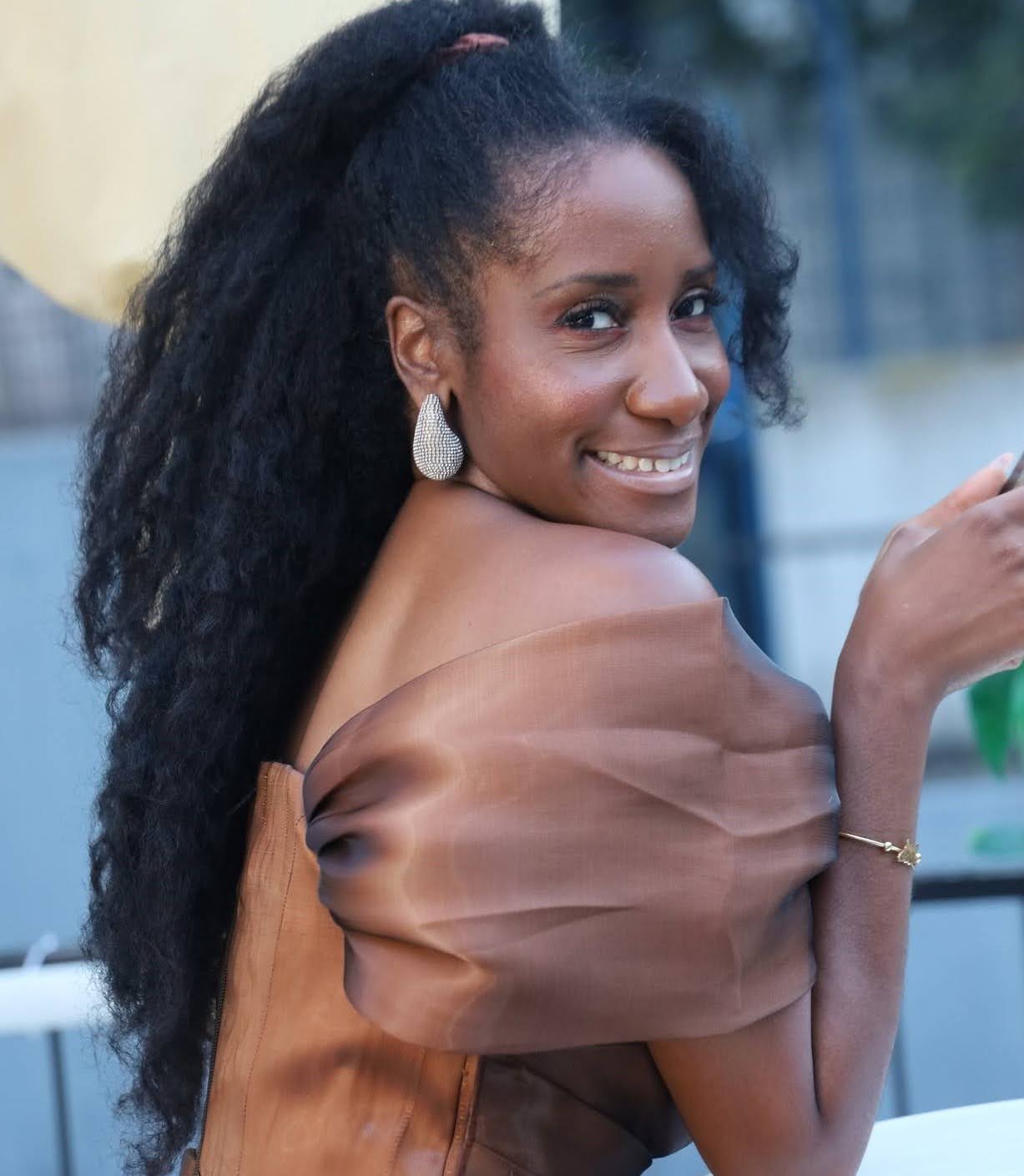
The British-Nigerian writer was invited to cover the Nollywood Film Festival in Germany, but what she found there went well beyond films; she discovered identity, belonging, and the power of storytelling.

When I first reached out to Isaac Izoya (Karma, Sinners in the House), Cultural Ambassador and founder of Ehizoya Golden Entertainment, the organization behind the Nollywood Film Festival Germany and the Nollywood Europe Golden Awards, he invited me to cover the festival.
The films themselves were incredibly moving. The audience seemed enthralled by the themes being explored. For example, the complex relationship between faith and medicine, the realities of infertility and longing to have children, in A Visit to Ward 4, produced by acclaimed Nollywood actress and filmmaker Rosabelle Andrews (Throne of Disaster, Bleeding Crown) and directed by Tony Edozie (Innocent Oath, Royal Calabash).
Themes of class, love and legacy were explored in Follow Me To Forever, produced and directed by Eric Stephenson (Luckily Unfortunate, Money Bag), investigating the tensions between family expectations, social status and personal desire.
However, what struck me was the nuanced richness with which these themes, relatable across cultures because of our shared human experience, were explored within the backdrop of Nigerian culture. It soon became clear that this festival wasn’t simply about films. It was about African storytelling, identity, belonging, culture, owning one’s own narrative and dreams too.
Who Gets to Tell Africa’s Stories? For Bob-Manuel Udokwu, Nollywood Already Answered
This question became especially personal to me during my conversation with Nollywood pioneer Bob-Manuel Udokwu (Living in Bondage, Adesuwa).

WATCH: Introduction of dignitaries at the 2026 NEGA Gala Night, featuring Bob-Manuel Udokwu, Nosa Rex and Rosabelle Andrews-
“The first thing I’m proud of is that the Nigerian film industry, which is now known as Nollywood, has taught Africa to tell its own story,” he said.
Bob spoke about his journey, his determination to show the world what was inside him, and the overwhelming drive to express it. What I found particularly powerful and what resonated with me was how he described this not simply as passion but as something deeper: an urge that could apply to any line of work, any calling, any gift that someone feels compelled to bring into the world. His words seemed to confirm something I had already begun to sense. This festival wasn’t simply about filmmaking. It was about pursuing purpose and fulfilling one’s potential. It was about creating something despite the barriers that tell you otherwise.
“The first thing I’m proud of is that the Nigerian film industry, which is now known as Nollywood, has taught Africa to tell its own story.”
|
At the same time, another theme emerged from our conversation: the importance of Africa telling its own stories and the danger of harmful and untrue perceptions taking shape when others tell our narrative for us. So what does it mean to have ownership of those stories, especially when there is such a direct link between the stories we tell and how Africa is portrayed internationally?
Growing Up British-Nigerian Meant Living Between Royalty and the Immigrant Reality
Growing up in Britain as the daughter of Nigerian parents, these conversations hit particularly close to home. I learned my culture through my mom. Beyond that, because I grew up in a predominantly White neighborhood, I had very little connection or reference point to Nigerian culture.

There was always a sense of duality. On one hand, there was the knowledge that there was royalty in my family: my grandfather was a chief, and my mom was a princess.
The significance of that sounded immense, yet felt far. I also grew up in a family where education was of the greatest importance, championed by both my parents.
On the other hand, I witnessed the realities of the immigrant experience, which placed my parents within systems that did not recognize the brilliance they brought. As a result, I grew up in an environment that looked completely different from the world my mother knew as her own. Coming to the festival, I realized these questions of identity hit so close to home because identity feels so interlinked with community and community with the ability to belong.
At a time when belonging has become such a buzzword, not only in wider society but also within workplaces and communities, I found myself surrounded by something that didn’t simply talk about belonging. It seemed to embody it. People had traveled from across the world to attend, and one guest spoke of genuinely feeling a sense of belonging.
I must admit that before arriving, I was slightly apprehensive because of what can sometimes feel like a divide between those born in Nigeria and those of Nigerian descent who were born outside Nigeria. But being there made tangible the possibility, and need, for connection: an evolving understanding of what it means to be African across different places and experiences.
What Nigerian Filmmakers Carry Wherever They Go
Throughout the festival, I asked each of the filmmakers and ambassadors I interviewed the same final question:
“What do you carry with you wherever you go?” Again and again, there seemed to be a common thread; people spoke about carrying what I can only term their Nigerian-ness. For some, it was grit; for others, it was pride; for others, it was home.
One of the festival’s award winners, actor and producer Nosa Rex (Jenifa’s Diary), spoke about “carrying where he comes from wherever he goes”, and the immediate connection that creates with others.
What struck me wasn’t only their answers; it was the energy that came over them as they described it. There was something about it that felt both palpable and infectious. It made me wonder what people in the diaspora carry and what shapes our identity when we haven’t grown up with those same reference points.
What role does Africa play, and what is our experience of knowing Africa? Is it from afar? If so, whose lens do we use to view it?
How does that inform not only how we experience Africa, but how we experience being of African descent in the West? At the same time, how much does Africa even feel like ours to embody? It feels like there is both hope and tension. Hope because there is clearly something shared, but tension because it also feels like a conundrum, with many questions I don’t yet have the answers to.
Yet sitting across from people describing their culture with such conviction, I found myself feeling something unexpected. There was room for my own perspective too. My authentic presence, thoughts and questions were welcomed.
Isaac had invited me into the festival without fully knowing my vision for the interview series. By pursuing his own vision despite years of pushback, he had made space for me to pursue mine.
In many ways, it felt as though the festival itself had become a bridge between Africa and the diaspora. It raised the question of whether film could become one of the ways Africa and its diaspora reconnect in a more meaningful way.
|
Isaac Izoya on Building a Legacy Before Anyone Recognizes It
At the end of the festival, my final conversation was with Isaac. “We believe the next generation yet unborn will read about us one day, will hear about us one day, and will honor us one day.”
He spoke about legacy. About continuing even when people don’t immediately recognize your vision, or when those in positions of power choose not to support you.

I arrived expecting to cover a film festival. I left with something much bigger. Not answers but questions about identity, about belonging. They matter to anyone who has ever tried to reconcile multiple identities, navigate different cultures or understand where they belong. And perhaps that is why I left Frankfurt not simply inspired by African cinema, but with a renewed belief in the possibility of building bridges through storytelling, creativity and the conversations that allow us to connect more deeply and honestly with ourselves, with one another, and with the stories that shape who we are.
A Note From the Editor-in-Chief
This piece was first published in New African and subsequently in The Voice. When we read it, we knew we wanted to bring it to the Black Film Wire audience, and we’re grateful to Boma for trusting us with it. It’s a first-person essay, and her voice is the point, so we’ve kept her words as she wrote them and only shaped the formatting to fit our pages.
It also lands at the right moment. First- and second-generation Nigerians in the UK, the US and across the diaspora are shaping what the world watches. Rapman, the British-Nigerian creator behind Netflix’s Supacell, has wrapped filming on the show’s second season. In October, Mo Abudu opened EbonyLife Place London, the UK’s first cinema dedicated to African and Black film, and this month she launched a $50 million Afro Film Fund with Paris-based Logical African Partners. Festivals like Nollywood Film Festival Germany have become an annual reunion for Africans living in Europe. Through all of it, identity remains one of the biggest conversations in our community: who we are, where we belong and what we carry. Boma asks those questions with honesty, and we’re glad to have her asking them on our pages.
We hope this is the first of many conversations with Boma on Black Film Wire.
Learn more about Nollywood Film Festival Germany and the Nollywood Europe Golden Awards on the festival’s FilmFreeway page.
Sahndra Fon Dufe, Editor-in-Chief, Black Film Wire
Discover The Reflective Shift
Created and hosted by Bomafabia Wokoma, The Reflective Shift is a conversation series exploring lived experience, identity and the ways we become who we are. A special collection of conversations filmed at Nollywood Film Festival Germany brings these themes into focus through the perspectives of Nigerian actors and filmmakers. The first two conversations from this collection, featuring Nosa Rex and Bob-Manuel Udokwu, are now available to watch, with further conversations to follow.
Explore the series and watch the latest conversation: https://visionliberate.co.uk/the-reflective-shift
About the Author
Bomafabia Wokoma is a UK-based filmmaker, creative producer and founder of Vision Liberate, a creative organization exploring identity, culture and the human experience through film, storytelling and community-led projects. She is the creator and host of The Reflective Shift, an original conversation series exploring lived experience, identity and the influences that shape who we become. Her work spans filmmaking, creative production and projects that encourage deeper reflection, connection and understanding.
Instagram: @bomafabia_w | Vision Liberate: @vision_liberate | visionliberate.co.uk
SUGGESTED READING:


Comments