
Olu Jacobs, The Lion of Lufodo, Dies at 84: Remembering the Actor Who Helped Shape Nollywood

Nollywood has lost one of its defining voices
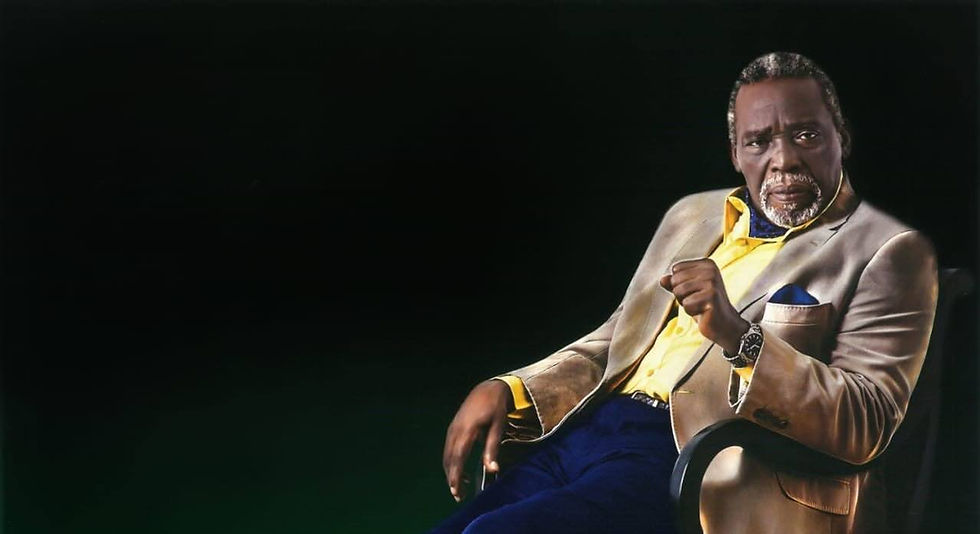
Veteran Nigerian actor and film executive Oludotun Baiyewu Jacobs, popularly known as Olu Jacobs, has died at the age of 84. His family announced his passing on September 16, 2026, describing him as “The Lion of Lufodo” and asking the public and media to respect the family’s privacy.
For more than five decades, Jacobs built a career that stretched across theatre, British television, international cinema and Nigerian film. He was not simply an actor who became part of Nollywood's history; he was one of the performers who helped give the industry its sense of theatrical weight, authority and professional discipline.

Trained at the Royal Academy of Dramatic Art (RADA) in London, Jacobs began his professional career in Britain, working in repertory theatre and appearing in British television productions before making his mark in international cinema. His early screen credits included films such as Ashanti (1979), The Dogs of War (1980), Baby: Secret of the Lost Legend (1985) and Roman Polanski's Pirates (1986).
He eventually returned to Nigeria, bringing with him years of international theatrical and screen experience. That experience became part of the foundation of the performer audiences would come to know.
The Olu Jacobs Era
Jacobs became one of the most recognisable faces of Nigerian film and television, appearing in more than 100 productions across his career. His commanding voice, measured delivery and ability to inhabit characters with authority made him particularly memorable in roles ranging from traditional rulers and political figures to fathers, patriarchs and men of power.
His Nollywood filmography included titles such as Dancing Heart, Oloibiri, The Royal Hibiscus Hotel, Dry, Amina, Potomanto and Adesuwa, among many others.
In Dancing Heart, his performance earned him one of the most significant competitive honours of his career: the 2007 Africa Movie Academy Award for Best Actor in a Leading Role.
His work in Oloibiri also formed part of his later-career contribution to Nigerian cinema. The film, centred on the historic Niger Delta oil town, featured Jacobs alongside other major Nigerian performers and was part of a period in which he continued to take on projects dealing with Nigeria's history and contemporary realities.
Then there were the films that introduced him to newer generations.
The Royal Hibiscus Hotel placed him within a contemporary ensemble, while Dry brought together a major cast around a story dealing with child marriage and women's rights. His ability to move between generations of Nigerian cinema was part of what made his career unusually enduring.
Beyond the Crown and the Throne
Jacobs became particularly associated with playing kings and powerful traditional figures, so much so that his name became almost inseparable from the image of the Nigerian screen patriarch.
But reducing his career to his royal roles would miss the breadth of his work.
Before Nollywood became the global industry it is today, Jacobs had already spent years developing his craft on the British stage and screen. His theatre credits included work with institutions such as the Royal Court Theatre, the Gate Theatre and the National Theatre, while his television work included productions such as The Goodies, Till Death Us Do Part, Barlow at Large, The Venturers, Angels, The Tomorrow People and The Professionals.
That background helped distinguish him as an actor whose career was built around craft rather than celebrity alone.
A Career Recognised by the Industry
Jacobs' contribution was recognised repeatedly throughout his career.
In 2007, he won the Africa Movie Academy Award for Best Actor in a Leading Role.
In 2011, the Nigerian government conferred on him the national honour of Member of the Order of the Federal Republic (MFR).
In 2013, he received the Industry Merit Award at the Africa Magic Viewers' Choice Awards, recognising his outstanding contribution to acting.
In 2016, he received the AMAA Lifetime Achievement Award, recognising his broader contribution to African cinema.
He was later honoured with a Lifetime Achievement Award at the Africa International Film Festival (AFRIFF) in 2021, while the Audio-Visual Rights Society of Nigeria honoured Jacobs and his wife, Joke Silva, with icon awards and membership certificates in 2022.
These honours tell only part of the story.
The Lufodo Legacy
Away from the camera, Jacobs' contribution to the industry continued through the work he built with his wife, veteran actress Joke Silva.
Together, the couple established the Lufodo Group, with interests spanning media production and distribution, and the Lufodo Academy of Performing Arts, helping create opportunities for younger performers and creative professionals.
This is an important part of Jacobs' legacy.
He did not simply participate in Nigeria's creative industry. He and Silva invested in the infrastructure around it, in production, distribution, training and the development of people who would come after them.
For an industry that has often been described as one built on talent but limited infrastructure, that contribution matters.
Remembering Olu Jacobs
Olu Jacobs belonged to a generation that helped move Nigerian performance from the stage and television into the rapidly developing world of Nollywood, and then watched that industry grow into a global cultural force.
His career crossed borders long before African cinema became a regular part of international streaming conversations.
He worked in Britain. He appeared in international films. He returned home. He became one of the defining performers of Nigerian cinema. And alongside Joke Silva, he helped build institutions designed to outlive individual careers.
Today, the industry he helped shape mourns him.
But the films remain.
The voice remains.
The performances remain.
Olu Jacobs, “The Lion of Lufodo,” leaves behind more than a filmography. He leaves a chapter in the history of African cinem


Comments