
“AFRICAN TALENTS DESERVE CLARITY, CONTINUITY AND OWNERSHIP” - IN CONVERSATION WITH WINGONIA IKPI, CEO OF NIGERIAN FILM PRODUCTION COMPANY BOXONIA BLUEPRINT

In 2025 Nile Entertainment, the Nigerian film distribution company founded by veteran film executive Moses Babatope, landed the African theatrical rights to Son of the Soil, a Lagos-set action-thriller from the UK's Sovereign Films and its genre label Action Xtreme. Lauded for its grit, colourful direction and swashbuckling sequences, the film has gone on to clinch festival awards and earn international distribution deals spanning Africa, the UK, the US, and Netflix.

Central to this story is Boxonia Blueprint, the Nigerian production and talent management company that served as a key local partner on the film. The outfit’s creative and logistical input helped shape a production that has been described by The Guardian as a "bone-crunching Lagos revenge thriller with bruising swagger." Launched in 2019 (with operations upgraded in 2024), the Lagos-based company specialises in ideation, production, post-production, and marketing strategy. It is also home to fast-rising actors like Taye Arimoro (Casa De Novia, A Night in 2005, Roses and Ivy), Cynthia Clarke (Cold As Ice, In His Head), Durotimi Okutagidi (Ile Ayo, Landline) and Chuks Joseph (The Origin: Madam Koi-Koi, Dark October, Afamefuna: An Nwa-boi Story).

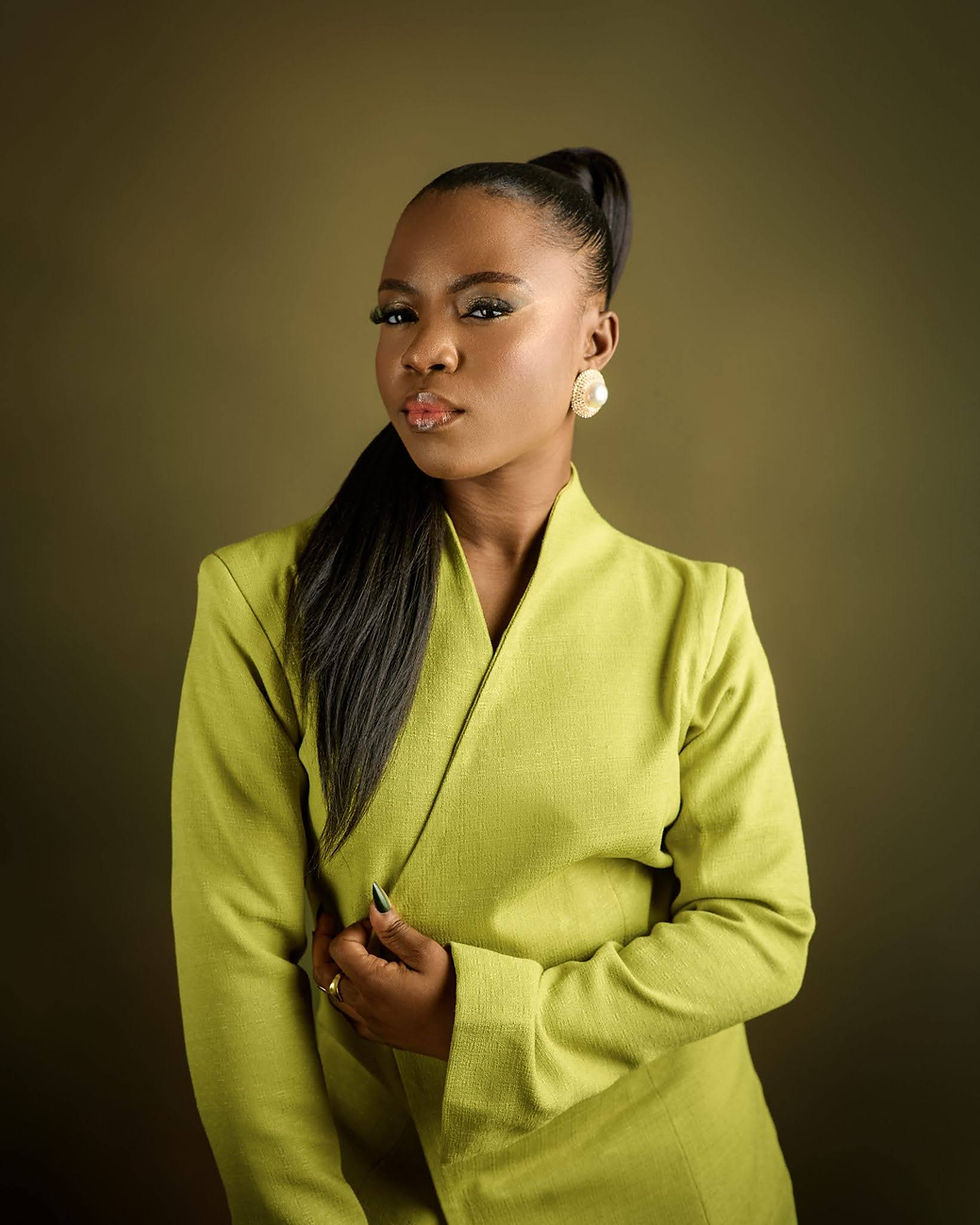
Boxonia is helmed by Wingonia Ikpi, a filmmaker and executive whose fingerprints are all over the contemporary Nollywood landscape. Her journey has seen her wear multiple hats as a screenwriter, producer, and content development specialist at FilmOne, before serving as producer on features like Bank Alert and eventually stepping into the director's chair herself. Her feature directorial debut, The Lost Days, was well-received following its release on Prime Video, and earned her a nomination for Best Debut Feature Film at the 2025 Africa Movie Academy Awards.
We caught up with Ikpi to discuss the process behind bringing Son of the Soil to life, talent management in Nollywood, Boxonia’s ethos, the intricacies of international co-productions, and structural dynamics of the African film ecosystem.
Son of the Soil brought together Nigerian, UK, and international producers across very different creative cultures. What did the day-to-day reality of that collaboration actually look like on the ground in Lagos, and where did it surprise you most?
The day-to-day reality was one of constant calibration of schedules, creative language, and everything in between, all shaped by the unmistakable texture of Nigerian production. On any given day, you'd have both UK and Nigerian teams collaborating intensely. British producer Ioanna Karavela worked remotely alongside myself as the Nigerian producer on the ground. Our UK-based editor consulted remotely with British cinematographer Jack Thompson, while our Lagos-based art department executed a vision that had to feel both globally cinematic and authentically local.
The biggest surprise was how quickly the cultural differences became creative strengths. The UK team brought rigorous health-and-safety structures and post-production discipline; the Nigerian team brought an improvisational energy and deep understanding of local terrain, talent, and texture. By week two, we were no longer "Nigerian" or "UK" crews, we were just the “Son of the Soil crew”. That fusion became the film's invisible backbone.
What were the logistical and creative challenges of anchoring an action thriller of this scale to Nigerian soil, and what convinced the international partners it was the right call?
Our international partners came in already committed to shooting in Nigeria, they believed in the story's authenticity and wanted it rooted in its natural environment. So the question wasn't about convincing them; it was about delivering at a scale that matched global expectations while working within the realities of production in Lagos.
Logistically, the challenges were significant: managing equipment importation and customs clearance, coordinating stunts in environments not built for complex camera movement, and ensuring that health-and-safety standards were met without losing the agility that Nigerian productions are known for.
Creatively, the challenge was resisting the urge to sanitize. The story demanded the raw texture of the gritty parts of Lagos and we had to protect that authenticity while still delivering a technically sound production.
Son of the Soil won three Black Star Film Festival awards and the AFRIFF Audience Choice Award. Festival recognition is one thing, but it has also earned a US theatrical release, and it’s currently streaming on Netflix. How do you perceive the commercial reception so far; have audiences responded to it in the manner you and your co-producers had imagined?

The reception has been proof of concept, not just for us as producers of an ambitious film, but for the broader idea that Nigerian action thrillers can travel. So far, we've taken Son of the Soil to festivals including the Black Star Film Festival, the Pan African Film Festival, AFRIFF, and more, screening and winning awards along the way.
What's surprised us most is the diversity of audiences who've connected with it. That tells us the appetite for Nigerian stories told at this scale is broader than we anticipated.
Every film teaches you something, and Son of the Soil taught us a lot about what works, what audiences lean into, and where the opportunities are for the next one. For Boxonia, that's fuel to keep going.
What are some of the structural gaps in Nollywood that you believe are most urgently holding the industry back from genuine global competitiveness?
The gaps fall into five categories: structure, funding, infrastructure, professional continuity, and distribution strategy.
On structure, I'm talking about the frameworks that govern how productions are built, from development to delivery. Too many projects are greenlit without proper development cycles, proper budgeting, or contracts. There's a tendency to rush into production without the pre-production rigour that separates a professional industry from a cottage industry. At Boxonia, we've built our model around fixing that: structured development slates, transparent financing, and clear contractual frameworks that protect both talent, productions and investors.
On funding, we need patient capital—investment structures that understand film as an asset class with longer lead times than most Nigerian investors are accustomed to. Too many productions are financed on short-term expectations that force rushed schedules and compromised quality. International co-productions have shown what's possible when you have properly structured financing, but we also need more local investment vehicles, funds, grants, and incentives that allow filmmakers to develop projects properly rather than chasing the next quick production to stay afloat.
On infrastructure, we need more studios with consistent power, more equipment houses with well-maintained gear, and more post-production facilities that can handle high scale deliverables without sending work abroad.
On professional continuity, we need standardized below-the-line training. Without it, every production is reinventing the wheel and losing efficiency and quality with each new crew.
On distribution, we still have too many films without proper distribution channels, and too few structured plans for international sales, VOD strategy, and lifecycle marketing.
Until these become industry standards rather than exceptions, we'll keep having individual hits without systemic growth.
Nollywood is extraordinarily prolific, but (obviously) this doesn’t necessarily translate to quality, as evidenced in raging conversations pertaining to the industry. What are your thoughts on raising the floor of production across board, rather than just pulling socks up for individual prestige projects and phoning it in for others? (This, of course, does not discountenance the issue of available resources.)
Nollywood’s volume is its strength and its Achilles’ heel. The industry tends to oscillate between “prestige projects” that get all the attention and a long tail of productions where corners are cut across the board. At Boxonia, we believe the floor needs to rise systemically. That means investing in a structure no matter the size of the projects. It also means talent management playing a role, if actors and crew are trained to expect certain standards, they’ll demand them across projects whilst bearing the Nigerian factor in mind. The goal shouldn’t be to make every film a festival darling; it should be to make sure no film is released that undermines the industry’s reputation.
You've worked within the FilmOne studio system as a content development producer, and you've also operated independently. What did that institutional experience teach you about what Nollywood's mid-sized independent companies are still getting wrong, and how does this influence your ethos at Boxonia?
Working within a structured system taught me the value of process. At FilmOne, I saw how proper development slates, clear greenlight processes, and consistent financial modeling can de-risk production and create predictability in an otherwise unpredictable industry.
What I've observed with many mid-sized independent companies is that they treat every project as a one-off. There's little institutional knowledge and infrastructure that carries over from film to film, and often no framework for thinking about IPs built for longevity rather than just the immediate next production.
All these experiences helped shape how we are building Boxonia. Our ethos is replicable excellence, whether it's a project, or a talent management decision, we have systems that ensure quality doesn't depend solely on who's in the room on any given day. We capture what works, learn, document, and carry it forward.
Boxonia's talent roster includes Taye Arimoro, Cynthia Clarke, Durotimi Okutagidi, Chuks Joseph, Miss Ezeani, and Victory Eyong (among others), each positioned with a distinct archetype. How much of that framing is strategic branding, and how much of it comes organically from who the actors already are?
It's a genuine blend. We don't believe in forcing talent into boxes that don't fit. When we sign a talent, it's because we see something special, a talent who can tell and sell audacious, authentic, and exportable African stories, both locally and globally.
What's strategic is the positioning: ensuring that each talent's projects, public appearances, and brand partnerships align with a clear lane that complements their natural strengths. The archetypes aren't manufactured; they're honed.
Having that clarity helps us make better decisions, whether pitching talent in Nollywood productions or positioning them for international opportunities, because we understand who they are and where they're capable of going. At the end of the day, our job is to build talents that can stand the test of time.

Boxonia is a 360° company spanning production, talent management, and commercial content. Why does that integration matter? Is there a risk of being spread too thin, or do you see the interconnection between those arms as a competitive advantage that more siloed companies can't replicate?
The integration matters because it creates alignment. When production, talent management, and commercial content operate in sync, every decision supports the bigger picture rather than pulling in different directions.
There's always a risk of being spread thin, but we've structured Boxonia so that each arm has clear leadership and distinct KPIs. The competitive advantage isn't in doing everything, it's in making sure everything works together. Integration allows us to move faster and present a unified front, avoiding the friction that often comes when these functions operate separately.
The integration of talent management and film production under one roof is still relatively rare in Nollywood. What are some of the intricacies of this model, particularly when you're both managing an actor's career and deciding which of your own productions they appear in?
The intricacies revolve around transparency and fiduciary duty. When we manage an actor, our responsibility is to act in their best interest even if that means recommending a project that isn't a Boxonia production.
We've built structural safeguards: the talent management division operates with its own leadership, and casting decisions for Boxonia productions go through a process that includes external considerations, not just internal preference.
What the model allows is strategic alignment. We build a talent's arc first; Boxonia productions only slot into that arc where they make sense. It requires discipline, but when done right, it creates a level of career planning that's rare in any market, let alone Nollywood.
Nigerian talent management as a formal, structured industry is still relatively nascent. What do you think African talent deserve contractually and professionally that they typically aren't getting, and how are you modelling something different?
African talents deserve clarity, continuity, and ownership. Contractually, they deserve to understand exactly what they’re signing, revenue, image rights without legalese designed to obscure. Professionally, they deserve career planning that looks beyond the next role: personal branding, long-term financial planning, and mental health support in an industry that can be emotionally demanding. Too often, talent is treated as a commodity rather than a partner. At Boxonia, we’re modeling something different by putting everything in writing, being transparent about revenue streams, and investing in our talent’s growth beyond just securing them roles. We also ensure that as they grow, their contractual terms evolve to reflect their market value. The goal is to create talent who are not just successful, but empowered, because empowered talents make better creative partners.
International co-productions often bear a kind of dynamic where the story is Nigerian but the creative control, financing, and ultimate profits sit elsewhere. Does this make the story less “Nigerian”, and from your perspective as the head of a production company, how do you “protect the story?
The question of authenticity in international co-productions often comes down to balance. A story's authenticity isn't determined by who writes the check, it's determined by who holds creative authority on the ground. The goal isn't to shut out international perspectives; it's to ensure that Nigerian stories aren't filtered through a lens designed to appeal to external audiences at the expense of their specificity.
That balance between staying true to the story and meeting global standards is exactly where Boxonia comes in. We protect the story by ensuring that Nigerian creative voices lead: writers, directors, department heads who understand the cultural context and can make creative decisions rooted in authenticity. At the same time, we work with international partners to ensure the production values, distribution reach, and storytelling craft meet global expectations.
When that balance is respected, the result isn't a compromise, it's a project that's unapologetically African and undeniably global. International partners bring financing and distribution expertise; we bring the soul of the story and the structure to deliver it at scale.
What would your ideal international co-production partner look like, and what would you want them to understand about Nollywood before sitting down at the table with you?
Our ideal partner understands that Nollywood is not a monolith, it's a complex industry with its own rhythms, talent pool, uniqueness, and audience expectations. They come to the table with a willingness to learn rather than impose. They respect that while international distribution models have value, they don’t automatically translate to African storytelling. And crucially, they see the partnership as a collaboration, not just a service agreement. The best international partners we’ve worked with have been those who said, “We know you know your world better than we do, show us the way.” That humility, paired with a vision, creates magic.
Are there specific markets where you think the appetite for Nigerian stories is most underserved right now, and where Boxonia is actively looking to build relationships?
The Francophone African market is significantly underserved, there’s a massive audience with shared cultural touchpoints but limited access to Nigerian content in formats they can easily consume. The Caribbean and parts of South America also have deep cultural connections to Nigerian storytelling that haven’t been systematically explored. In Europe, beyond the UK, markets like Germany and the Nordic countries have shown appetite for African stories but lack consistent distribution pipelines. Boxonia is actively building relationships in these regions and understanding what stories resonate and how to tailor our slates to meet those markets where they are, without compromising authenticity.
What's the piece of infrastructure — whether financial, legislative, technical, or cultural — that Nollywood needs most urgently, and do you think the industry is close to building it, or is it still far off?
Financially, we need patient capital, funding that understands film as an asset class with longer lead times than most Nigerian investors are accustomed to. Currently, too many productions are financed on short-term expectations that force rushed schedules and compromised quality.
Legislatively, we need clearer incentives for production, including tax breaks for international co-productions filmed in Nigeria, to compete with South Africa and Ghana.
Technically, infrastructure is improving, but we need more training for below-the-line crew to sustain the growth.
Culturally, we need to shift the perception that film is merely a passion project rather than a serious industry requiring institutional support.
Are we close? On some fronts, yes, there's momentum. On others, like structured financing, we're still in the early innings. The next five years will determine whether we take a leap or continue taking incremental steps.
You're a founder, a producer, a director, a talent manager, and a casting director. At what point does Boxonia need to grow beyond you, and what does building a company that outlasts any single person's creative energy look like from where you're standing right now?
I've always believed that the goal of a founder is to make themselves less essential over time. Boxonia is at a stage where we're actively building out leadership across each division, a 360° team that
cuts across legal structure, financial structure, production, talent management, distribution and commercial content who can operate autonomously and bring their own creative visions to the table.
Building a company that outlasts any single person means embedding systems, culture, and succession from the start. It means documenting processes, nurturing internal leadership, and creating an environment where the best ideas can come from anywhere, not only the top.
Even as I remain involved in operations, my focus is equally on the bigger strategic vision: expanding into new markets, building international partnerships, and mentoring the next generation of creative leaders.
The goal is to build an ecosystem that doesn't need me to run it, but that I'm proud to have started.


Comments