
Interview: Sahndra Fon Dufe Talks Faith and Cross-Continental Growth in Black Film Wire’s First Year

Updated: Dec 8, 2025
Editor-in-Chief Talks on Building An Emerging Film Media Outlet as Black Film Wire Celebrates First Anniversary

To celebrate Black Film Wire’s first year of operations, we sat down with Founder and Editor-in-Chief Sandra Fon Dufe to talk about milestones attained, challenges, and the overall vision for the media outlet. She touches on her motivations and insight gained from older industry professionals. She also addresses young film and media personnel, giving words of advice on their approach to dealings. Read on below!
1. "What was the vision behind Black Film Wire?"
To understand the vision behind Black Film Wire, you have to understand that I’ve been a storyteller since before I even had the language for it. Anyone who attended Lourdes College, Bamenda with me from ages 10 to 17 knows this about me without question: I was the storyteller. I wasn’t just in the drama club or the school magazine; I was everywhere stories were being created and shared. I danced professionally, staged performances, learned Beyoncé choreography, and performed it for crowds. I wrote constantly, my notebooks were filled with stories, not class notes. By 14, I was voted Social Prefect (in charge of school recreation, dance, events, etc.), a role I held until graduation in 2007.
That thread continued into university. I danced professionally with a group called Black LM, represented my school, and became president of LESA, the Lourdes Ex-Students Association, at 19. I say all of this because creativity isn’t something I do because it’s trendy or convenient. It’s not a pivot. It’s the core of my being. I genuinely don’t know who I am outside of storytelling. It’s a gift, I believe God gave me, and my entire life has been about honoring it.
After school, entering the entertainment industry was the most natural next step. I used to tell people in Cameroon about my Hollywood dreams, and they would laugh, “What is she talking about?” but I always knew. I knew I was going to operate on one of the highest stages in the world, and even then, I sensed that what I carried wasn’t just for me. I didn’t have the full articulation then, but the urgency and responsibility around storytelling were already there.

Fast forward twenty years ahead, and by God’s grace, I’ve told stories across almost every format imaginable. I’ve published books, written television screenplays, acted in multiple titles, and moved into the corporate creative sector, doing communications and campaigns for companies, lending my voice to different expressions of creative work. In 2012, I founded African Pictures International, a production company with a consultancy arm focused on film and creative-sector communications. I was building that while working across various corporate roles.
Black Film Wire was born out of the season that came next. In 2022, as I was completing an assignment in Nigeria with Del-York Group, I returned to the United States after the pandemic to a brutal job market. Despite being overqualified and deeply experienced, I found myself applying for work, taking internships, essentially starting over. I volunteered with the African Diaspora Network (ADN), and through that, met Chike Nwoffiah, the founder of the Silicon Valley African Film Festival. That meeting changed everything. I began working with SVAFF as Director of Partnerships and Media, doing extensive outreach to multiple media platforms. Meanwhile, the boutique consultancy side of African Pictures International was independently covering major events throughout the year. Essence Festival 2023, ABFF, and many others, slowly reintroducing myself to the U.S. after years abroad.
By 2024, I was contributing to BellaNaija, The Nollywood Reporter, and other platforms. I was constantly reviewing films, sometimes independently, sometimes alongside other critics and scholars. That period, from late 2023 through 2024, fundamentally shifted my perspective. Immersed in Black film, African film, and diasporic cinema, I kept noticing the same gap: Black filmmakers were not getting the coverage they deserved. The stories being told about "our stories" felt incomplete, surface-level, or limited to traditional spaces that weren’t looking at new sectors. Reporting often seemed rooted in an old way of doing things, and I felt compelled to build something that catered to the future.
That’s when the vision crystallized. Black Film Wire would be the platform that centers Black filmmakers and Black stories with the depth, nuance, and urgency they deserve, across continents and across the diaspora. A platform designed for this moment and for the world emerging ahead.
The legacy I want to create is one where Black storytellers are covered by people who genuinely care about them.
Even now, when you go to festival circuits, you’ll see that we still don’t have enough Black publicists covering Black films. And that’s without even touching Nollywood and other emerging Black markets. At the same time, more Black actors globally, including Black British talent, are gaining real market share in the industry. We need platforms that match this momentum.

For me, Black Film Wire is meant to be a forward-thinking company. A core part of our identity will always be shorter stories, news, entertainment, concise reporting, and spotlighting the Black stories you don’t always see. Other platforms lean academic or long-form, which is fine, but our mandate is different. I want us to be among the first to break stories. I want us to focus heavily on newer sectors, EVOD platforms like Tubi, YouTube, TikTok, gaming, and filmmakers just emerging from school.
That is what I want Black Film Wire to be known for: a platform rooted in strong Black storytelling, committed to new formats, new creators, and the future.
2. "How have you achieved cross-continental coverage in the last one year, especially with such a young team?"
Before I even go into strategies, I must start by thanking God, because the idea for the Black Film Wire is something that came directly from God. I had explained previously what 2023 and 2024 were like, the gaps we saw in the market, and the role we wanted to play.
At that time, I reached out to Chike Nwoffiah, founder of the Silicon Valley African Film Festival. I told him, “I’m trying to start this platform, I need help, I don’t know what I’m doing.” He told me, “Put your thoughts down, have a sense of where you’re going,” and he blessed the work.
Because of my work at the film festival, I had been brought into proximity with African icons:
Souleymane Cissé (of blessed memory, Mali)
Sir John Kani (South Africa)
Julie Dash (United States)
Richard Mofe-Damijo (Nigeria)
These are legends. Sitting with them, receiving their wisdom, feeling blessings passed down — it was powerful. At Google Headquarters, when Richard Mofe-Damijo was being asked about Black stories and how to elevate them, he kept pointing back at me, saying, “Work like the work Sahndra is doing.” Months before Black Film Wire was even born. It stayed with me.

As the vision grew clearer, I went back to Chike; God used him to position me in rooms where I could soak up that wisdom. Then, while working on the platform, raising money, and figuring out a name, I started speaking with Michael Maponga (founder of Afroland TV). He advised me on naming, positioning, and markets.
Michael told me it’s best to start with one market and become an expert; if I must pick a second one, choose strategically. So we chose:
Nigeria — because historically, their entertainment platforms have succeeded, and I was already contributing to some of them.
The United States — the largest home of Black creators in the world.
Those were our Year 1 markets. Become experts in those two, grow intentionally, and later expand based on strategy — not vibes.
And then something happened: as soon as I settled on the name “Black Film Wire,” the domain price was impossibly low. Chike said God must have hidden that name for me. I believed it. And soon after, the first article given to us came from FilmOne Nigeria — before we even officially launched. A woman from their marketing team emailed asking for a press release. She had read my previous ESSENCE Festival coverage. That was divine confirmation.
Now, regarding cross-continental coverage: partnerships have sustained us. We have many informal partnerships already (formal ones still coming). We started with our strengths: platform credibility, relationships, and our young writers.
Black Film Wire has a team of about 20 staff: writers, editors, producers, and social media staff. They are from different cultures, religions, and nations — Muslim, Christian, multi-tribal, Anglophone, Francophone. We also have about 20 influencers, plus contributors who come in and out as needed.
We cover continents through the power of partnerships, through mentorship, through young African writers rising to excellence.
My leadership style for now is very hands-on. That will change because we just hired a new Junior Editor-in-Chief — John Eriomala — who is actually conducting this interview for me.
These are the foundations of our cross-continental strategy, and everything else builds on this.
3. "What story/coverage are you most proud of?"
I’m proud of all of our work. The Black Film Wire team works hard, and that alone is something I’m deeply proud of. But if I were to name a few moments from the last 365 days — because we are just one year old — here are some that stand out.
In November, we traveled to Barbados for the GUBA Awards — my first time there — and Black Film Wire covered the Trade and Investment Summit. Among the many things that were fascinating about the experience, what stood out the most was the historical significance: over 400 years ago, the Atlantic routes were used to transport enslaved Africans from West African shores to the West. Being part of conversations and storytelling that aim to restore those connections across the diaspora felt deeply meaningful. I am so grateful that Black Film Wire was chosen as one of the media outlets to cover that.

We must also thank SBB Media for making that partnership possible. We are grateful.
Before that, in September/October, we worked with Omotola Jalade-Ekeinde, one of Africa’s biggest stars, on her directorial debut Mother’s Love. Covering her process, helping to frame her story, and reporting her film’s journey to festivals like TIFF and the Silicon Valley African Film Festival was incredible. When she shouted us out on stage at SVAFF, I almost fainted. These are people we grew up watching on TV in Cameroon. I’m not Nigerian, but being from a small country and witnessing these dreams unfold — dreams I had as a child — moved me deeply. Our whole team was proud.
Then in the summer, in Los Angeles, we covered Richard Mofe-Damijo’s producing debut, Radio Voice. It was such an honor. We had an amazing red-carpet run, our reports were well received, and the community’s engagement showed us people were paying attention.
We also covered many film festivals this year, including SVAFF. There were many other stories, but these moments — Barbados, TIFF, SVAFF, Mother’s Love, Radio Voice — will sit with us forever.
Our team celebrates our wins. We work hard. These are achievements we don’t take lightly. We thank God for the opportunity to tell these stories.
4. “What is the biggest challenge you've faced this year as the head of Black Film Wire and African Pictures International?”
As a Black woman — a relatively young Black woman, running a business with a staff I am responsible for, my biggest challenge has definitely been financial.
I just told you how many employees I have. Every single month, regardless of whether we make money or not, I am responsible for paying them. These are young people who have trusted a company I invited them to build with me. We are only one year old. We do not yet have major lines of credit or grants. But we will get there.
I use funds from other parts of my work to subsidize and sustain this business. We are growing, and I’m confident in the work we’re doing. We don’t have as many ads yet, but we are preparing to make the business fully eligible and structured for that. So yes: finances are a significant challenge.
The second challenge is human resources and management. Many of my team members do not live in the U.S. We are a global team. Paying them on time, meeting global standards, navigating time zone differences, differing capacities, remote challenges — it is work. Management is not easy. But I am blessed with the best team. They are intelligent, gifted, and dedicated. Many had never done this before. Some felt unsure at first. But recently, we had a team meeting where each person spoke about how this experience has stretched and grown them. Many of them shine 360 degrees now.

Also, coming from countries with high unemployment rates, being able to offer opportunities — even small ones — means a lot to me. Creating even a small dent in those statistics is not something to take for granted. Yes, there are challenges. African Pictures International has its own challenges, too, which I can discuss another time. But overall, I am grateful. I thank God for 365 days of magic.
5. “What is one major target you have for Black Film Wire in the next coming year?”
We have a lot of targets for next year. We have so much to do. A lot of projects are already in motion. But one thing about us is: we are a platform backed by strategy, not excitement. We rely heavily on data — internal metrics, industry trends, and insight into what our focus areas should be.
As I mentioned earlier, we just hired a Junior Editor-in-Chief, and he will focus on executing many of the things we developed last year. That frees me to focus on the business: addressing the challenges we’ve faced, building profitability, raising equity, and engaging in more mentorship with young writers. That is one of our major targets next year: operational strengthening + business expansion + leadership growth.
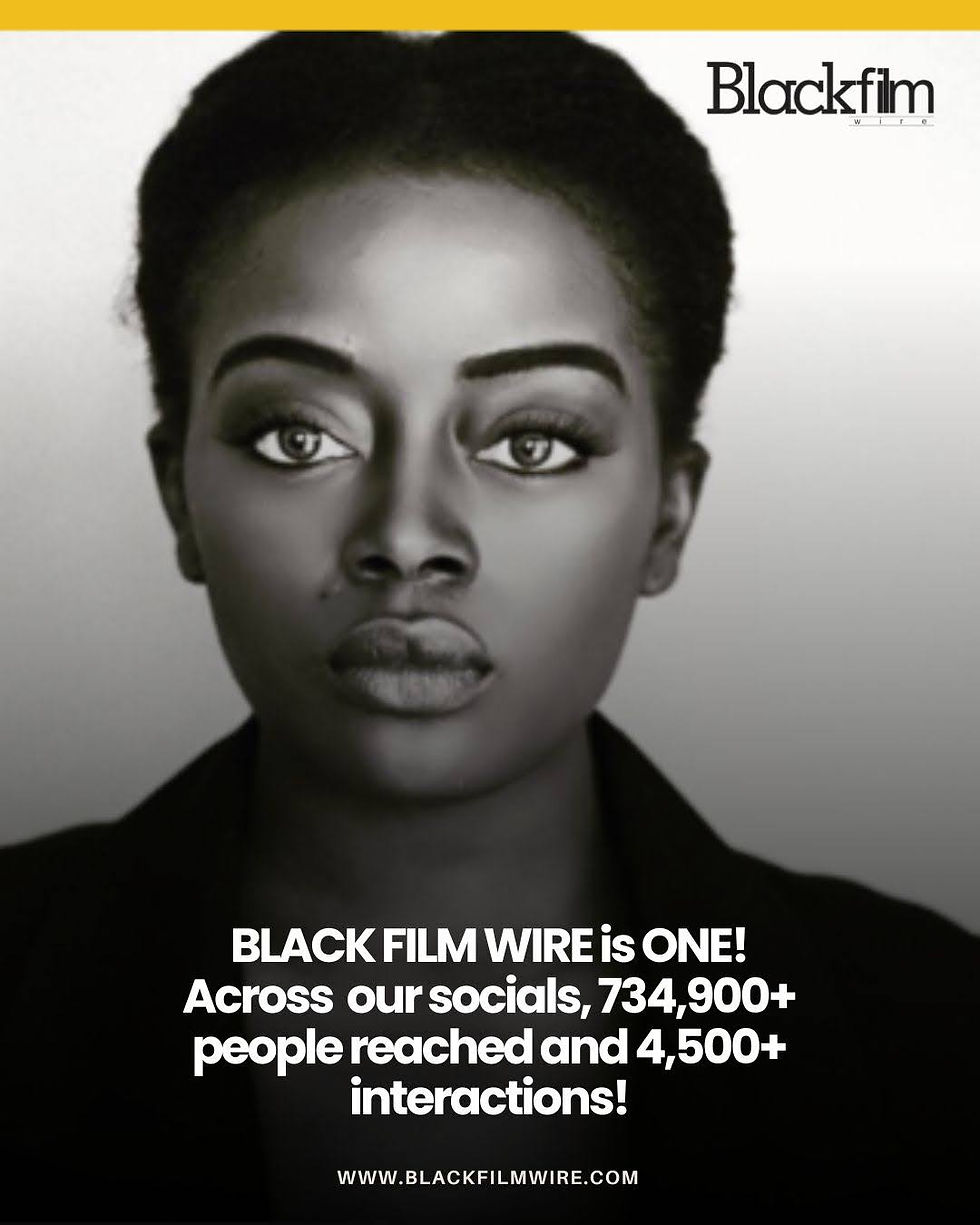
As for our broader business plans, you’ll have to follow us and see. But please know: we are excited for the future, and we are preparing heavily to compete more effectively. Let me give you some numbers to show what we have achieved this past year (Web & Instagram alone, Facebook, LinkedIn, etc, not included):
312 stories.
32,658 views.
8,190 readers.
102 countries.
700K+ reached on IG.
If you consider how many countries exist in the world, and what this growth means in just one year, this alone shows the traction we’re building. And this does not include our social media numbers, which are significantly higher. So yes — for next year, our top target is internal strength + scaling with strategy + leadership expansion, all rooted in data, not hype.
6. “What is one thing people do not know about Black Film Wire?”
One thing many people don’t know about Black Film Wire is how much we root for the underdogs. Yes, we cover major stories — because we need money and visibility — but that is not our only motivation. We often go after stories we’re not even paid to write. Stories about emerging voices. Students. Young filmmakers.
For example, this summer I was in California at USC for graduation events. I saw a young Nigerian woman graduating and being honored. I saw other young filmmakers being recognized. These are not people who can pay us big budgets. But I felt compelled to tell their stories because I know that five years from now, they could be the next Ryan Coogler.
I remember hearing Ryan Coogler’s name long before he made major films — when he was still a student. Someone took a chance on covering him early. And today, he’s one of the biggest directors in the world. Imagine how he feels about those who stood by him in the beginning. That’s who we want to be known as: the platform that sees you early, honors you early, and helps amplify your beginnings. We did a piece this year about young writers shining on Africa Magic. It was well-read and people loved it. Why? Because it sits at the heart of who we are.

We also want more partnerships so people can send us leads quickly, so we can cover stories and have the capacity to do so. We care about independent filmmakers, student filmmakers, women filmmakers, minority filmmakers, gaming creators, EVOD creators — and we want them to reach out. We want to tell their stories.
Another unknown fact: our team is exceptionally diverse. The number of African languages spoken within Black Film Wire would shock people. English, French, Hausa, Bini, Yoruba, Ibibio, and many more.
We did several interviews this year — including with Timini, RMD, Angela White, among others — but one that touched me deeply was with Simisola, the young Nigerian actress from Disney’s Iwájú. After the interview, her mother and publicist sent me messages saying things like: “You were born to do this.” “No one has ever made her feel this comfortable.” “You’re so knowledgeable about the industry.” That meant so much to me. And to the team. Because we love this work. And I’m so proud to be raising young writers who also love and respect artists.
We are not a selfish company. We are here for the artists. We are here for the underdogs. And that is something people do not always know.
7. “What is your advice to a young, upcoming film or media professional?”
I want to broaden this question, because the same principles apply to all young creatives, not just those in film or media.
Your voice matters. Your story matters.
For Black creatives, especially, we are living in a very unique and unprecedented time. You must ask yourself a very important question — one I’ll speak more about throughout my career:
“What is the creative’s role in nation-building?”
Your gifts were placed in you by God. Yes, there are things that unite us and things that set us apart. But do not erase the part that makes you uniquely you. If you forget that, you will make the wrong decisions in your career.

Creativity is a hard career. It is not predictable. The world is going through shifts — pandemics, job droughts, and the rise of AI. But the fear-mongering that creatives are going to lose their jobs? That’s not the truth. Your role will not disappear. It may evolve, but it will not vanish. I pivoted many times in my own career. I started as a creative. Then I learned how to write for business. Then God called me back into the creative side, and I merged all these skills. Pivoting is essential. Do not be fixed on one outcome. Adapt when needed. But do not sacrifice the integrity of your story, because that requires sacrificing the integrity of yourself — and that you must never do.
Now, the Bible speaks about diligence. Even if you are not religious, I will tell you what guides me:
Anyone who is diligent will stand before kings.
Kings will come to you. Your work will call them to you.
Whether one person reads your work or the whole world does, you must produce excellence. The global stage is opening wider and wider to African and Black creatives. What will you do with that opportunity? There is power in your pen. Do not let anyone take it from you.
And remember: with great power comes great responsibility. You must be accountable. You must grow your character. Because no matter how talented you are, nobody wants to work with someone who has bad behavior. Deal with your demons privately so that when God elevates you, they do not drag you down publicly. It takes nothing to be respectful, helpful, kind, and diligent. Nobody closes the door on people who help.
And in my land, in my culture, we say:
“I am somebody because of somebody.” (“Wir Dze Wir, Bih Wir”- (that's in Lamnso, my dialect)
So when you enter a room, ask yourself: Who am I carrying with me? We just started this company, and we have already carried 50 young African creatives with us in one year — and thousands more through our coverage. That's my contribution. What will yours be? Do not forget what I have said. These principles will save you.
8. "Where do you see BFW in the next five years?"
I have a lot to say, but without revealing all of my business plans publicly, I can tell you this:
We look forward to becoming, by God’s grace, one of the industry leaders — a company you know, want to work with, want to partner with. We look forward to entertaining you. We look forward to building something inclusive, innovative, and multi-format.
I’ve never been a monolith. Growing up, people could never box me. When I moved to Hollywood at a young age, they asked:
Are you an actress?
Are you a writer?
Do you write novels? Fiction? Nonfiction?
Do you write film or television?
You have a law degree?
You blog? You vlog?
They didn’t know what to do with someone like me because the industry wasn’t used to multidimensional creatives. Today, it’s normal — but back then, it wasn’t. So when I think about Black Film Wire, the one thing I can say is:
We are not a monolith!
This is how we have started. This is what we are doing today. But over the next five years, you will see many diverse expressions of who we are. New formats. New verticals. New ways of reaching people. All still rooted in strong Black storytelling. We aim to be one of the best at what we do. To partners, investors, advisors, contributors, teachers, friends, supporters: reach out to us!
My name is Sahndra Fon Dufe. I am a Cameroonian-American creator and producer. I am very keen on collaboration, very grateful for what God has done, and very ready for what is coming.
9. "One more thing you want people to know about African Pictures International, in particular."
One thing I want people to know about African Pictures International is:
We are coming!
There is so much ahead. Stay tuned. Work with us. We are a good company to invest in because our hearts are in the right place. We care sincerely about strong Black stories. We are very clear on who we are and what we hope to contribute — both in terms of nation-building in certain countries and in shaping the identity and narrative of the Black person globally.
We are on our way. And we know who we are. Thank you very much.
Please visit Black Film Wire, follow us across all our social media pages, and stay connected with our growth.
And a big congratulations to our newest Junior Editor-in-Chief: John Eriomala
Thank you.
TO SEE THE BEST QUOTES FROM THIS INTERVIEW, VISIT


Comments