
Zack Orji on Building A Continuous Legacy in African Cinema

Updated: Feb 14
At 68, The Nollywood Pillar Who Went Pan-African Before Streaming Made It Cool Reflects on Building Distribution Networks Across Three Decades
By Sahndra Fon Dufe, Editor-in-Chief | Black Film Wire, Atlanta GA
February 4, 2026

On his 68th birthday, Nollywood veteran Zack Orji is still building. He is not retiring to retrospectives or tribute galas, but commissioning scripts, directing across borders, and preparing to launch an owned YouTube channel as platform dependency becomes the new distributor risk.
Nine months ago, when Black Film Wire sat with him on set in Batoufam, Cameroon, he was playing a king in succession drama 15 Wives, a title that immediately calls to mind King Mswati III of Eswatini (known for his 15 wives and 55+ children), though Orji's script takes a different narrative direction: a king transferring power to his son due to health challenges.
This conversation, conducted during production, reveals how one actor's bilingual upbringing became a competitive advantage, how distributor relationships functioned as informal financing networks, and why piracy remains the industry's longest-running structural challenge. With over 300 films across 33 years and 20+ countries, Orji represents a rare breed of the generation that didn't just participate in Nollywood's rise, but those who built its infrastructure from scratch.
Zack Orji on the set of 15 Wives in Batoufam, Cameroon
The Influence of Bilingualism on His Craft
Orji arrived in Cameroon at nine, attended St. Anthony's Catholic School in Buea, and completed primary education in English. Surprisingly, his father made him repeat primary school, this time entirely in French. As a result of this, his younger brother advanced to secondary school before him and Orji resented this twist.
"My middle name is Amaefula, which means 'let my heritage not be lost,'" he explains. Years down the line, the benefit of that twist would become clear to him as his bilingualism opened French-speaking markets across West and Central Africa when Nollywood films were still distributed via VHS and VCD.
In 1978, the French embassy in Lagos selected him as one of 60 students for a three-week exchange in Lomé. During this exercise, he was selected to lead the group. Decades later, he directed and starred in a French-language film shot in Yaoundé and Douala. Orji had achieved, two generations ago, the kind of cross-market production that contemporary streaming platforms are in hot pursuit of, by virtue of that decision his father made when he was young.
Zack Orji’s Lead Role in The Unforgiven Sin (1993)
In 1993, filmmakers developing The Unforgiven Sin, a story based on the Igbo caste system simply told Zack that he fit the lead character after which they handed him the script. He would return three days later to satisfy the filmmakers, having mastered the script.
Zack Orji's entry into Nollywood illustrates how the industry operated before formalized casting systems. No auditions were barely conducted before selecting actors. Negotiations were also very brief; candidates were simply and easily picked for production. But Orji adds a detail that explains his longevity: "By the way, I studied Estate Management at the University of Nigeria."
His background had nothing to do with film, not even remotely. On the other hand, it was in structured thinking, which he applied to an industry building itself in real time. The closest thing to training for him was his attraction for Clint Eastwood and Lee Van Cleef, actors whom he consistently watched in Cameroonian cinemas. He was fond of seeing them and of practicing his delivery in front of a mirror until he himself was convinced.
"You alone can be your best judge," he says. "If you're getting it right, you know."
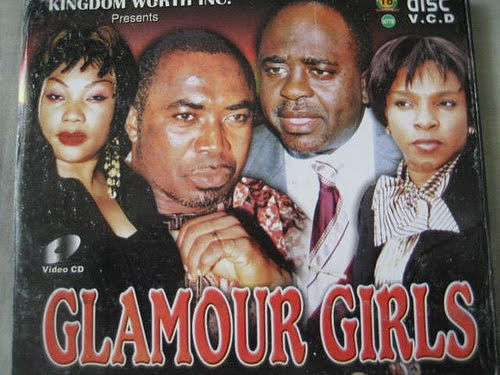
Distribution Economics: The Marketer System
One of the interview's most instructive moments comes when Orji describes getting his first producing opportunity: a distributor spotted him driving, flagged him down by the road and said:
"Zack, I've been looking for you… I want you to produce a movie for me."
Orji explains how distribution actually worked. In his explanation, he noted that marketers controlled post-production output, and after a film wrapped, producers negotiated how many VHS/VCD copies would enter circulation, then negotiated revenue per copy sold. There are no formal contracts, or tracking systems.
He names specific projects:
Love in Vendetta (with Kate Henshaw): his first producing credit
Return to Kazondia: the first Nollywood production to relocate from Lagos to Jos for script-specific locations—a logistical flex that's now standard but was radical in the late 1990s
A Ghana run where a distributor sold 10,000 copies in less than a week, then proposed a territorial split: Orji owns Nigeria, distributor owns Ghana
That Ghana deal led to Orji's directorial debut, Web. The same year, a friend bought him 25 books on cinematography, lighting, and acting. Orji spent over 200,000 Naira, significant capital at the time, on self-education. ($1,800 at the time, or about $3,100 in today's dollars)
By 2003, he directed Bonds of Tradition, which passed through the British Board of Film Classification and secured UK distribution. This was a reflection of sheer power of will, and cross-border thinking, even before "pan-African cinema" became a funding category.
The Industry's Piracy Problem
Orji doesn't romanticize the VHS/VCD era. For him, piracy was the industry's most persistent challenge, and clarifies that the pirates weren't just street vendors.
"Even the distributors themselves used to pirate our own films," he says. "They controlled mass production. They could print extra copies beyond what was agreed and sell them under the table. You wouldn't know."
Producers watched others profit more from their work than they did and it became an institutional problem in the industry.
While streaming offered temporary relief, Orji points out that it is building a newer power dynamic: YouTube channels, direct audience building, owned distribution.
"He's currently commissioning ten scripts for his own channel, not just for films, but for commentary and personal archives. The move signals what many Nollywood veterans are realizing that platform dependency is just another form of distributor risk. Kanayo O. Kanayo, Bob Manuel Udokwu, and Charles Inojie have similarly built owned YouTube presences, reclaiming direct audience access after decades of value extraction by intermediaries."

Pan-African Reach: 300+ Films, 20+ Countries
When asked how many films he's done, Orji answers simply: "It's above 300."

He hasn't seen three-quarters of them. It's one project into the next, a volume-driven model that defined Nollywood's growth phase and made stars like Orji recognizable across the continent before Netflix discovered the market.
His work has taken him across:
Benin Republic (acting - French, 2005)
Cameroon (20 years of projects, acting and directing)
Gabon (acting and directing)
Guinea Conakry (acting and directing)
South Africa (22 years, series and features)
Sierra Leone (2003, By Bure Goes to War)
Ghana (directorial debut, 2001)
Gabon (directing in his country of birth, 2009)
Guinea-Conakry (directing and starring, 2018)
Rwanda (masterclass for 253 actors, free of charge, 2018)
Uganda (directing and acting, 2006)
United Kingdom (acting, 2013 and 2017)
United States (Close Enemies, 2007; multiple Maryland projects)
Most opportunities, he says, arrived "by a phone call."

Sierra Leone, 2003: Cinema as Post-Conflict Infrastructure
The most revealing moment in the interview was Zack’s revelation about what film does in markets beyond entertainment.
In 2003, Orji traveled to Sierra Leone for Bai Bureh Goes to War , with a cast including Omotola Jalade-Ekehinde, Genevieve Nnaji, and Olu Jacobs. They were flown in by helicopter. At that, streets were lined with crowds and people filled hotel balconies waiting just to wave. Even at a stadium reception, the venue was full with some people crying.
"Nollywood films gave them entertainment and consolation during the war," Orji pointed out as he recalls. "And now they were seeing the actors live."
This is the part of film economics that doesn't show up in box office reports: what stories do for people when formal infrastructure collapses. Nollywood held communities together when governments couldn't.
What Orji Tells Young Filmmakers
Orji's advice to emerging talent is consistent and structural:
1. Education first.
Not because degrees make you talented, but because maturity helps you choose the craft with clarity.
2. Don't aim to be a "star."
"You build your wisdom around your gift. Stardom is a byproduct."
3. Read.
After his 2001 Ghana win, he invested heavily in film books. "Talent is not enough," he says plainly.
4. Understand the business.
Know who controls reproduction, distribution, and revenue. Because if you don't, someone else will and they'll profit from your work.

When asked about his longevity, Orji credits both discipline and faith: "God is not only the God of creation, he's also the God of creativity." It's a perspective common among Nollywood's founding generation, many of whom came from religious broadcasting backgrounds or saw filmmaking as ministry-adjacent work. That spiritual framing helped sustain output during periods when financial returns were uncertain.
According to Black Film Wire
Orji's career exposes a critical gap in how African cinema history is archived: the infrastructure-builders are often misread as just "actors." But Orji's trajectory from self-taught performer to producer navigating informal financing networks to director securing UK distribution, illustrates how Nollywood's first generation operated as de facto studio executives without the studio.
His current move toward owned YouTube distribution mirrors a broader industry shift. After decades of value extraction by marketers, pirates, and platforms, veteran creators are reclaiming audience access.
What Orji built was more than just a filmography; but a working model for how to sustain creative output across markets with inconsistent infrastructure, unreliable gatekeepers, and predatory distributors. That model is relationship-driven, volume-focused, linguistically flexible, and pan-African by necessity, and remains more relevant than the platform-dependent strategies currently dominating industry discourse.
At 68, Zack Orji is still building. For anyone trying to build sustainable creative careers in markets where formal systems either don't exist or actively extract value, his trajectory offers a more honest model than most industry manifestos: educate yourself, own your relationships, understand the money, and never assume the gatekeepers have your best interests in mind.
ZACK ORJI: KEY FILMOGRAPHY

Editor's Note
This interview was conducted on set in Batoufam, Cameroon, in April 2025, during production of 15 Wives, where Black Film Wire Editor-in-Chief Sahndra Fon Dufe served as co-screenwriter and cast member. The conversation has been edited for clarity and structured to prioritize industry insight over biographical detail, in alignment with Black Film Wire's editorial standards for trade-facing celebrity interviews.


Comments