
Omotola Jalade-Ekeinde's Mother's Love Joins Only 4 Films in History to Donate 100% of Theatrical Proceeds to Charity: A First for Africa
- Sahndra Fon Dufe

- Mar 14
- 11 min read
In her 30th year in film and her directorial debut, Nollywood legend, TIME 100 honoree, UN World Food Programme Ambassador, and global screen icon Omotola Jalade-Ekeinde turns Mother's Love into an unprecedented act of giving committing box office proceeds to Slum2School Africa and placing the film among only 4 in global cinema history to make this level of philanthropic commitment.
By Sahndra Fon Dufe, Editor in Chief, Black Film Wire
Published: March 14, 2026

LAGOS, Nigeria — In a move that industry observers are calling unprecedented in the history of African cinema, the production company RedHot Concepts has announced that 100 percent of the theatrical proceeds from its Nigerian feature film Mother's Love will be donated in full to Slum2School Africa, a Nigeria-based non-governmental organization dedicated to expanding educational access for children in underserved communities. The film is distributed in Nigeria by Nile Entertainment.
The announcement was made publicly at a special screening event on the evening of March 13, 2026 organized in barely 48 hours: attended by over 200 guests, including government officials, civil society leaders, and representatives of the international development community, with some traveling from as far as Abuja to be present. Among those in attendance were Zakari Momodu of the Dangote Foundation; Ifueko Omoigui-Okauro, Board Member of MTN and Nigerian Breweries; Alero Ayida-Otobo, CEO of the School of Politics and Government and Board Chair of Slum2School Africa; Ambassador Nimi Akinkugbe, former Nigerian Ambassador to Greece; Adeola Azeez, founder of WIMBIZ (Women in Management, Business and Public Service); Rabi Isma, Chairperson of ActionAid Nigeria; Jummai Musa, Country Director of Street Child International; Dr. Victoria Ekhomu, actor in the film and Chairman of Transworld Security Systems; Omolara Cookey, CEO of Noji Arts; Ayodele Alabi of Nigerian Breweries; and Patrick McMicheals, CEO of The Fat Butcher. The evening also welcomed approximately 50 members of the Makoko community: the very community at the heart of the film's story, including traditional rulers Baale Alashe Francis Agoyon, Chief Kpanke Victor Usa, and Chief Shemede Emmanuel, whose presence gave the announcement its most profound dimension: the community itself bearing witness.
According to a formal Board of Directors resolution by RedHot Concepts, all proceeds accruing to the company from the theatrical cinema run of Mother's Love during its 8-to-10-week exhibition period are committed entirely to Slum2School Africa. The funds will support educational programs and, where possible, housing assistance for families in vulnerable communities — with particular emphasis on the Makoko waterside settlement in Lagos, whose stories and lived realities are central to the film's narrative.

A GLOBAL RARITY: WHAT THE RESEARCH SHOWS

Research by Black Film Wire finds that, globally, fewer than five films in cinema history have been documented as committing 100 percent of their theatrical proceeds: not merely net profits, but proceeds — to charitable causes. The distinction matters enormously in film finance.
In standard theatrical distribution, revenue is divided before it ever reaches a producer: cinemas typically retain 45–55 percent of ticket sales, and distributors take a further cut before the producer sees a single naira. What reaches RedHot Concepts at the end of that chain is already the hardest-earned portion, the share that comes last, after everyone else has been paid. It is precisely that share: every percent of it, that Omotola Jalade-Ekeinde has chosen to give away entirely.
Among the most cited global precedents of films that pledged their producers' proceeds or profits:
The Promise (2017): Produced by the late Armenian-American billionaire Kirk Kerkorian, this film about the Armenian Genocide pledged all profits to humanitarian and human rights organizations, including the Elton John AIDS Foundation. The commitment covered the producer's profits, not gross proceeds.
Devotion (2022): Producers at Black Label Media arranged for future revenues, after recoupment of production costs and contractual obligations to be directed to the Hudner Navy Scholarship Foundation, supporting children of U.S. Navy veterans.
One Direction: This Is Us (UK re-release, 2025): Following the death of Liam Payne, this concert film returned to select UK cinemas in a special run in which 100 percent of ticket profits were donated to mental health awareness charities.
Black Film Wire found no prior documented case of a film produced or released on the African continent committing 100 percent of proceeds from its full theatrical run to a charitable cause. Mother's Love is a verifiable first for Africa.
Importantly, the RedHot Concepts commitment is structured around proceeds, not profits. The company has not attached conditions of recoupment before the donation begins. According to its Board resolution, the donation is effective across the entire duration of the film's Nigerian theatrical exhibition period, overseen by an independent legal adviser and auditor.
CONTEXT: HOW FILM AND PHILANTHROPY HAVE INTERSECTED — AND WHY MOTHER'S LOVE IS DIFFERENT
To fully appreciate the historical weight of the Mother's Love decision, it is instructive to examine how other notable films: globally and on the African continent, have approached the intersection of cinema and charitable giving. In every comparable case, the commitment was either partial, indirect, profit-based, or campaign-driven rather than a total, unconditional, proceeds-level donation from a full theatrical run.

Globally, some of the most celebrated examples of film philanthropy include:
Schindler's List (1993): Director Steven Spielberg refused to personally profit from the film, directing his earnings toward the creation of the USC Shoah Foundation. The institution has since documented more than 55,000 Holocaust survivor testimonies and grown into one of the world's most significant historical archives. The model here was creator profit donation; a filmmaker giving personal earnings, not box office proceeds.
Black Panther (2018): The film did not donate its box office revenue to charity. However, it sparked one of the most powerful charity screening movements in modern film history. Activist Frederick Joseph launched the #BlackPantherChallenge, which raised over $1 million to bring more than 20,000 children from underserved communities to theaters for free. The campaign demonstrated the mobilizing power of film-adjacent philanthropy; but was driven by donors outside the production, not by the producers themselves.
Star Wars: The Force Awakens: Force for Change (2015): Disney and Lucasfilm partnered with Omaze for a campaign in which fans donated for a chance to attend the world premiere and meet the cast. The initiative raised over $4.26 million for UNICEF and other global children's charities. This was a premiere fundraising model tied to experiential access, not to ticket proceeds.
On the African continent and in Africa-focused cinema, the philanthropic models have been similarly indirect, meaningful, but structurally distinct from what RedHot Concepts has now done:
The Boy Who Harnessed the Wind (Netflix, 2019): Chiwetel Ejiofor's acclaimed film about Malawian inventor William Kamkwamba dramatically amplified awareness and donations for the Moving Windmills Project, a nonprofit supporting schools, STEM education, and renewable energy in rural Malawi. The film functioned as a global awareness engine for an existing social mission, but did not donate its own revenues.
Beat the Drum (South Africa/U.S., early 2000s): This HIV/AIDS-focused social impact film helped generate proceeds that supported the establishment of Beat the Drum Village in Kenya, a facility providing housing, education, medical care, and food for children orphaned by the epidemic. One of the clearest African examples of film revenue contributing to permanent charitable infrastructure — though through distribution proceeds, not theatrical box office.
Shout Gladi Gladi (documentary): This documentary addressing obstetric fistula: a devastating childbirth injury disproportionately affecting women in sub-Saharan Africa partnered with the Freedom From Fistula Foundation. Screenings worldwide were used as fundraising events for surgical treatment programs, making the film a direct tool for medical giving.
Charlize Theron Africa Outreach Project: Actress Charlize Theron has used film premieres and gala screening events to raise funds for her foundation's HIV prevention and education programs across Africa. These premiere-plus-gala models, combining VIP ticket sales, celebrity appearances, and donor tables, represent a well-established indirect mechanism for film-adjacent charity fundraising.
In every case above, the philanthropy was partial, campaign-based, campaign-adjacent, or linked to distribution revenue rather than the entirety of theatrical proceeds. None involved a production company formally resolving, by Board decision, to transfer 100 percent of its own share of the box office to a named NGO for the full duration of a theatrical run. That is precisely what makes Mother's Love structurally unprecedented.
"The Nollywood First: When Omotola Turned a Film into a Gift for Nigeria."
— Nigerian industry observer
THE WOMAN BEHIND THE FIRST: 30 YEARS, ONE DEBUT, ONE HISTORIC DECISION
The significance of this announcement is inseparable from who is making it. Omotola Jalade-Ekeinde is celebrating her 30th year in the Nigerian film industry in 2026, a milestone that places her among the most enduring and influential figures in African cinema. In those three decades, she has been one of Nollywood's most recognizable faces, an actress whose work has been seen by hundreds of millions of viewers across the continent and its diaspora.
Mother's Love marks another milestone: it is her debut as a director. The film that Omotola has spent years developing, shooting on location in Makoko, navigating through production challenges including a personal surgery, and shepherding to Nigerian cinemas via Film One — is her first film as a director. That she chose this film, on this occasion, to make this decision, is not incidental.
The film centers on Labake, (played by Omotola) a mother whose relentless sacrifice for her daughter Bisi, and her unwavering belief in Bisi's friend Obaro sets him on a journey from the Makoko waterfront to international recognition as a tech innovator.
The parallel with Omotola's own real-world decision is not merely symbolic. By committing 100 percent of the film's theatrical proceeds to Slum2School Africa: an organization that serves thousands of children in the very communities where Mother's Love was filmed, Omotola has enacted, offscreen, the same kind of fierce, unconditional giving that her character Labike embodies on it.
She is not simply playing a mother who gives everything for her child. She has become, through this act, a mother to thousands of children she will never personally know; children in Makoko and communities like it, whose education, dignity, and futures now rest in part on what she was willing to give.
It is a juxtaposition that African storytelling rarely produces so cleanly: the fiction and the reality folded into one another, the character and the creator becoming indistinguishable in their generosity. In her 30th year. On her directorial debut. With her first film.

THE FILM, THE COMMUNITY, AND THE PARTNERSHIP
Mother's Love draws on the authentic lives of communities like Makoko, one of West Africa's largest waterside settlements to explore themes of maternal sacrifice, social inequality, and the transformative power of education. A central character, Baruch, rises from Makoko to study in New York, win technology competitions, and build a successful app; a narrative arc that Slum2School Africa's team recognized immediately as a mirror of its own learners' journeys and aspirations.
The partnership between RedHot Concepts and Slum2School Africa predates the theatrical release. Slum2School Africa opened its classrooms, learning centers, innovation labs, and office spaces in Lekki as production locations, without charging any fees because the organization saw the film as an opportunity to tell the stories of the communities it had served for over 14 years.
"When she mentioned she wanted to do this in the community, it was an opportunity for us to give back we had worked in this community for over 14 years. The storyline mirrored what 100 percent of our learners experience: being judged before they are seen. We felt it was important to leverage the platform."
— Otto Orondaam, Founder & Executive Director, Slum2
Orondaam added: "There was nothing that was planned. There was nothing that was expected. There was nothing that was anticipated."

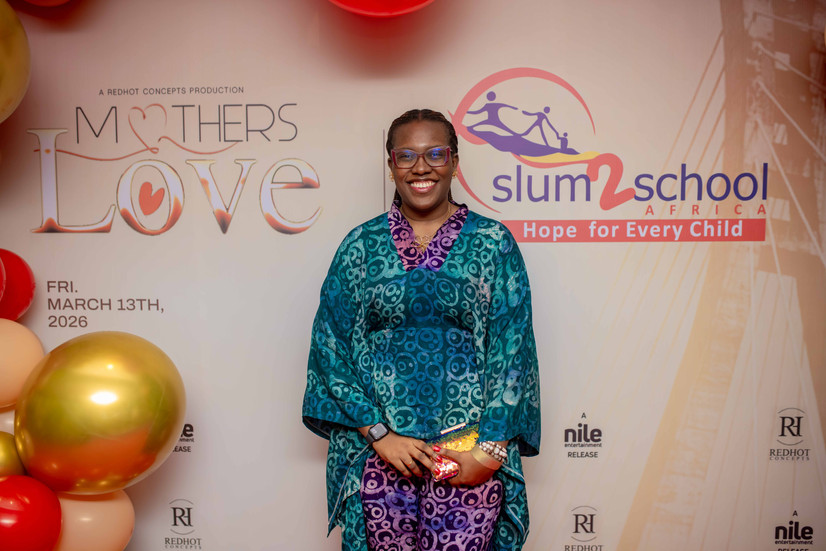


















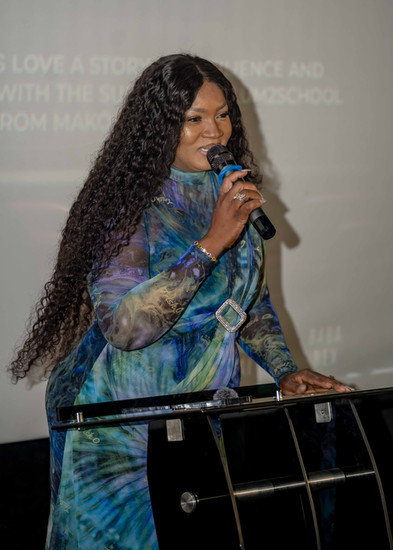















Addressing an audience that included members of the diplomatic community, development partners, and press at the March 13 screening event, Omotola Jalade-Ekeinde described the decision as a moment of unexpected moral clarity:
"A few days ago, I experienced what I can only describe as a moment of moral clarity. A thought came to me with unusual force: align your debut with your passion."
— Omotola Jalade-Ekeinde, Producer & Director, Mother's Love
Reflecting on her decades of humanitarian advocacy — as a UN World Food Programme Ambassador, an Amnesty International Advocate, and a partner to organizations including Save the Children UK and ONE — Omotola framed the decision as an extension of a lifelong mission:
"My passion has always been rooted in advocating for vulnerable communities, particularly children whose potential is limited not by ability, but by circumstance. Then God put it in my heart to do what I'm about to announce. I struggled with it, argued with it... But that moment of clarity challenged me to ask a deeper question: What if the story did more than inspire? What if, all along, God wanted it to directly transform lives?"
— Omotola Jalade-Ekeinde
She outlined the accountability mechanisms accompanying the donation including direct transfer of proceeds by distribution partner Nile Entertainment to Slum2School Africa, independent audit oversight, and a commitment from Slum2School to publish a comprehensive public report on outcomes before closing with a direct call to her peers across the global creative industry:
"I hope this moment serves as an invitation to my colleagues in the creative industries worldwide. Film, art, and culture possess enormous influence. When we align that influence with compassion and responsibility, we can transform platforms into instruments of progress. Tonight, Mother's Love becomes more than a film. It becomes a promise to use our voices, our stories, and our influence to expand possibility where it is needed most."
— Omotola Jalade-Ekeinde, speaking at the Mother's Love announcement event, Lagos, March 13, 2026
WHY THIS MATTERS FOR AFRICAN CINEMA
The announcement arrives at a pivotal moment for the African film industry. Nigeria's Nollywood, now the world's second-largest film industry by volume, has spent the past decade building the theatrical infrastructure, digital distribution networks, and international partnerships necessary to compete on the global stage. Films like Mother's Love represent a new generation of Nigerian productions that aspire not only to commercial success but to structural social impact.
The trajectory of Mother's Love also reflects a broader pattern Black Film Wire has tracked across Nollywood: a maturing industry cycle in which A-list talent is increasingly moving into directing, producers are asserting creative ownership, and multi-territory visibility is becoming central to long-term brand equity. Omotola's transition from actress to director-producer is not an outlier: it is the leading edge of where the industry is heading. That she has used that transition to set a global philanthropic precedent makes the moment doubly significant.

The Mother's Love model is structurally different from all prior African philanthropic film efforts. It does not rely on a secondary campaign or third-party fundraising. The production company itself has resolved, by formal Board resolution, to transfer 100 percent of its own proceeds from the theatrical run. That resolution is accompanied by provisions for independent legal and auditing oversight, a level of institutional accountability that signals this is not a gesture, but a governance decision.
The implications for the continent are significant. If replicated, the model creates a template by which African filmmakers can transform their theatrical runs into direct social investment vehicles connecting the economics of cinema to the funding needs of the communities that inspire their stories. Attendees at the March 13 screening event reportedly pledged additional individual contributions on the night, suggesting the announcement is already catalyzing a wider wave of giving.
Black Film Wire has followed Mother's Love since its inaugural festival appearance in June 2025, when Omotola Jalade-Ekeinde was awarded a Certificate of Excellence in the category of Debut Filmmaker; a distinction that, in retrospect, foreshadowed both the film's steady ascent through the international circuit and the historic announcement that now defines its legacy.
ABOUT SLUM2SCHOOL AFRICA
Slum2School Africa is a Pan-African nonprofit organization based in Nigeria with over 14 years of continuous work in underserved communities, including Makoko. Its programs focus on expanding access to quality education through scholarships, learning centers, academies, and broader community development initiatives. The organization has built strong partnerships with international institutions and has served over one million learners since its inception.

ABOUT MOTHER'S LOVE
Mother's Love is produced by RedHot Concepts and distributed in Nigeria by Nile Entertainment. The film draws on the authentic lived experiences of communities including Makoko, Lagos, exploring themes of maternal sacrifice, social inequality, and the power of education to transform lives. It marks Omotola Jalade-Ekeinde's debut as a film director, released in her 30th year in the Nigerian film industry. The film was produced in partnership with Slum2School Africa, which provided community access, filming locations, and institutional support throughout production.
Prior to its Nigerian theatrical release, Mother's Love traveled an extensive international festival circuit — with screenings at SVAFF, the Toronto International Film Festival (TIFF), the Dubai International Film Festival, and the Pan African Film Festival (PAFF) building sustained diaspora engagement and press momentum across multiple territories. The film will subsequently embark on a global theatrical tour timed for Mother's Day 2026.
###
© 2026 Black Film Wire. All rights reserved. For rights and permissions, contact info@blackfilmwire.com


Comments