
They Can't Take Our Joy and Our Edges
- Sahndra Fon Dufe

- May 30
- 11 min read
Updated: Jun 1
The Netflix "Celebration of Black Television" Panel at ABFF Was the Therapy We Didn't Know We Needed
By Sahndra Fon Dufe | Black Film Wire | ABFF 2026, Miami Beach
Panelists: Michelle Buteau · Amy Aniobi · Krystle Stewart · Courtney Kemp · Maleah Joi Moon · Debbie Allen · Felicia Pride · Mario Van Peebles · Moderated by Nina Parker

I almost didn't make it, but thank God I did.
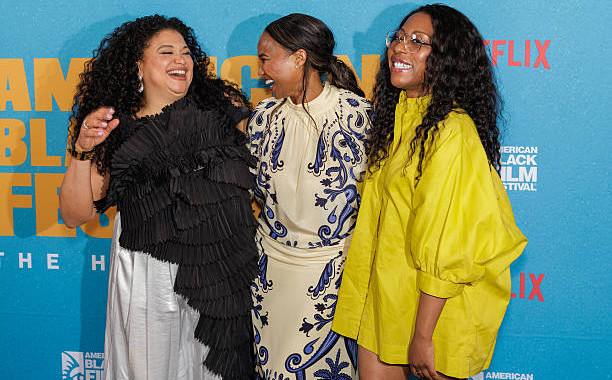
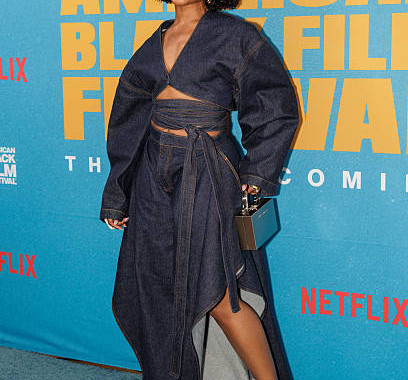
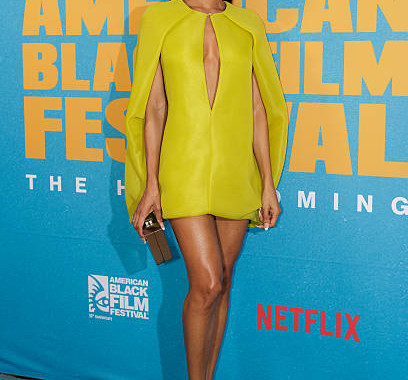
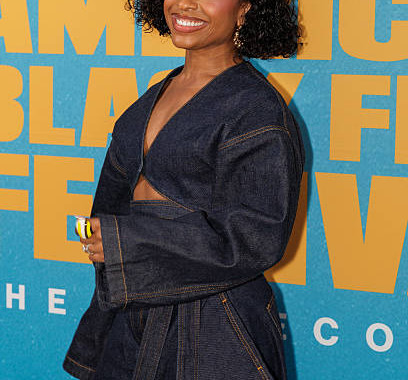
The queue outside the New World Center in Miami Beach was doing what Miami queues do: queuing with intention. Black people were looking good and smelling good. Miami pastels and mustards, natural curls and coils catching the afternoon light, perfume rising off the line like a soft agreement between strangers. ABFF volunteers, warm, efficient, genuinely happy to be there, greeted everyone and moved the crowd with the kind of hospitality that reminds you this festival actually cares about the people who show up for it.
Lincoln Road was buzzing with the particular electricity that only ABFF produces, that specific frequency of Black creative people who found each other, who keep finding each other, year after year, in this city. I walked into the room, found my seat, and within fifteen minutes, I was crying.
Not sad crying. The other kind.
"They Cannot Take Our Joy and Our Edges. Period."

Michelle Buteau said it like she was issuing a decree. Like she was planting a flag. Like she had thought it on the drive over and decided, yes, this is the opening statement, this is what we're doing today.
And just like that, the Netflix "Celebration of Black Television" panel became something else entirely. This wasn't just a promotional showcase for some of the most-watched Black shows on Netflix right now: Nemesis, Survival of the Thickest, Beauty in Black, and the long-awaited A Different World sequel, among them. It became a room full of people who had figured some things out and were refusing to keep it to themselves.
One show that was meant to be represented but couldn't make it because they are busy filming was Forever, created by Mara Brock Akil. That alone tells you something about the moment we're in.
This is my attempt to give you what that room felt like. Not just the headlines. The room.
The Wholesome Part Nobody Warned You About

Here is something you don't always get in these panels: people who believe that wholeness matters. Not hustle. Not sacrifice. Wholeness.
There is a particular brand of creative-industry wisdom that sounds like: grind alone, trust no one, your art is your only relationship. This panel was its antidote.
Ms. Debbie Allen, 42 years married and glowing about every single one of them, looked out at the audience and said something simple and devastating: what you do or don't have at home affects your work. Full stop. No hedge. Not a suggestion. A fact she had earned. She said it the way someone says something they've lived, not as a lecture, but as a gift wrapped in warmth and a little bit of Texas.
Courtney Kemp, who built the Power universe and is now reshaping television again with Nemesis, went somewhere even more specific. If your partner responds to your biggest dream - I'm going to have the biggest show in the world someday, with "that makes me feel like less of a man," or "you'll be too busy for me," she said, you may have to let that person go. Let your dream out, even if it means walking into a season of romantic solitude first.
The room got very quiet.
And then Michelle Buteau, being Michelle Buteau, reminded everyone to take their medication, protect their knees, and sit down sometimes. "It's so easy to work 20 hours and be like, I'm back! Sit down, b****." She was laughing. She was also completely serious. Krystle Stewart offered her three P's: patience, persistence, and prayer, and talked about losing everything two years ago and rebuilding through those principles, from pageants to Miss USA to a television career that is only accelerating. Maleah Joi Moon, young and luminous and carrying the weight of being the daughter of Dwayne Wayne and Whitley Gilbert on a new television legacy, said something that landed softly and then kept expanding: there will be rooms that are welcoming to you. Hold onto people who cherish you. Let the rest slide off your back.
I don't know when panels like this started feeling like church. But this one did. And I was not the only one in that room who needed it.
Love Is Not a Monolith (They Said It Themselves)

If there was one thread that ran through every single voice on that stage, it was this: love, in all its forms, is the point.
When Nina Parker steered the conversation toward the love stories being built in this new era of Black television, the panel didn't narrow the question; they expanded it. Felicia Pride (showrunner) talked about A Different World's central relationship not being Dwayne and Whitley, but the community they had. The love of a healthy collective. The love you have for people, even when you're fighting them. When asked, Felicia also said she does Black love, and then clarified: "I mean friendship. I mean spiritual. I mean community. I mean familial. I mean romantic. I mean erotic. I mean all of them," and Ms. Allen agreed.
Maleah Joi Moon spoke about the loneliness epidemic, the way social media and a world in crisis pushes people toward isolation, and said she hopes the show is a reminder that love exists inside social justice too. That showing up for each other is love. That protecting one another is love.
Krystle Stewart talked about the complexity of Mallory in Beauty in Black: a character so hard-edged that audiences weren't sure she was capable of love at all, until a single breakdown scene cracked her open, and suddenly she was us. Taylor Polidore Williams (from the same show) talked about humanizing a character as the core act of empathy. Once you truly see someone's circumstances, love for them becomes automatic.
The panel wasn't just making television. They were making the argument, in real time, that love in its fullness, its mess, its grief, its friendship, its politics is the most radical thing Black storytelling can do right now.
Where Is Young Black America? (And Where Is Africa?)

Ms. Debbie Allen asked the question that anchored the whole conversation: where is young Black America? What are they thinking? What are their dreams, their brick walls, their glass ceilings?
Thankfully, also directing "A Different World" sequel arriving on Netflix on September 24th - yes, the exact 39th anniversary of the original NBC premiere, she explained with the clarity of someone who has been sitting with this question for years. She said the goal was always for the sequel to feel like a warm hug. But not a comfortable one. A conscious one. The political sharpness that made the original so essential, the conversations about apartheid, about date rape, about HBCUs as sites of both joy and resistance, those weren't being softened. They were being translated. Through a social media lens. Through state violence. Through globalization. Through the particular pressure of a generation that wakes up to every crisis in the world before they've had breakfast.
And Maleah, who plays Deborah Wayne, the daughter of Dwayne and Whitley, an amalgamation of both, spoke about the epidemic she keeps seeing everywhere: loneliness. The inclination to isolate. She said she hopes the show reminds people that love isn't just romantic. It lives inside social justice. It lives inside showing up. It lives inside a full HBCU campus with hundreds of students in the courtyard.
Black Film Wire wants to add a word here: where is young Black Africa? The diaspora conversation does not end at the Atlantic. It was born there, but it does not end there.
We were at ABFF this year with Lights Out- a Cameroonian psychological drama exploring dementia, grief, memory, and institutional neglect, starring Wale Ojo, Shaffy Bello, and Syndy Emade, directed by Enah Johnscott, and produced by Carista Asonganyi and Buh Melvin. African Pictures International accompanied this film to Miami. From Limbe to Lincoln Road. Cameroon was in the room.
Black storytelling is not an American story. It is a planetary one, and when Ms. Debbie says she wants to know where young Black people are dreaming, we are raising our hands from Yaoundé to Johannesburg to Lagos to London. The reach has to mean everywhere. The continent is not the backstory. It is part of the plot.
The Craft Corner: What They Actually Taught

This is a trade publication, so let me be direct about something that distinguished this panel from many others: they taught. Not vaguely. Specifically.
Courtney Kemp on scene construction: Both people in a conflict scene must be right. Not one right, one wrong. That is a boring scene. When both characters are right in their own way, that is the structure that holds. Michelle and Amy Aniobi called it the special sauce: everyone is right and wrong at the same time. Watch Nemesis or Survival of the Thickest with this framework, and you will not be able to stop watching. Courtney also talked about the scene nthat wasn't in the first cut: Stiles going to see his father. Without it, you don't understand why he is the way he is. You can withhold from your audience, but not for too long. Revelation must come before the audience gives up on the character.
Michelle Buteau on specificity: Not "write what you know" in the vague, unhelpful way that phrase usually lands, but be specific to you. The more particular, the more universal. Write the thing that is so specifically yours that you were afraid no one would recognize it. That is exactly the thing they will recognize. She knows. She wrote Survival of the Thickest while fighting dyslexia and a world that kept asking her to shrink. She stopped catching up. She decided the world could catch up to her.
Amy Aniobi on the starting point: They are not forgotten in our lives. The characters who are underrepresented — plus-size, queer, trans, fat, Black, and brown are not absent from the world; they were absent from the screen. Start with what you want to see. What does your world actually look like? Write that. This weekend.
Ms. Debbie Allen on change and continuity: The same river, different water. You cannot step in the same water twice. The A Different World sequel is not a nostalgia project, it is a living continuation. A football field. Hundreds of students. Walls covered in contemporary art, asking who is the Basquiat now? Preserving something means keeping its spirit while releasing its form.
Mario Van Peebles on complex imagery: New Jack City worked because you connected with everyone: the gangster, the cop, and the victim. The crime was not glamorized; it was made three-dimensional. When Courtney and Tani brought him Nemesis scripts, he said they had taken it way further. His job as director was to make Los Angeles a character to be at Griffith Park at exactly the right light, to cast the look of a city the way you cast actors, to let visuals move from primary reds to cool blues and back again.
On Culture, Economics, and Why You Need to Show Up

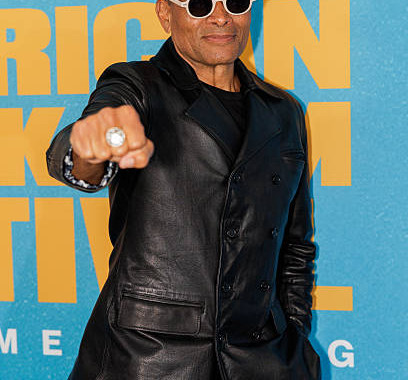
Tani Marole, Courtney Kemp's fiancé and co-architect of the Nemesis universe, said something that deserves to be written somewhere permanent: we are the culture. We define what's cool. And Mario Van Peebles, dressed the way he directs (with full intention and a little cinematic swagger), took it further: the Huxtables became the Obamas.
This is not a feel-good slogan. It is an economic and political argument.
There is a lie that gets told: quietly, persistently, in rooms where decisions are made, that Black shows and Black films don't travel. That they don't export. Tani named it the dirty secret. And he had the receipts: America exports weapons, finance, and culture. A large portion of that third category is Black culture. The gaslighting is strategic. If you can convince creators that their work only has a niche audience, you can keep paying niche rates and offering niche support.
Don't believe it.
And Courtney said something else, something practical and urgent: if you want A Different World to come back for more than 10 episodes, watch all 10 in one sitting. Watch it multiple times. Because a streaming watch count is a vote. It is how Ms. Debbie Allen gets her "we need to go further" answered. It is how Felicia Pride gets another season. It is how a Black executive at Netflix gets to keep their job and keep advocating in that room. The chain is real. You are part of it.
On Being the Door

Someone asked how she got to the door.
Courtney Kemp's answer: you are the door.
Not: someone opened it for you. Not: the right person saw you. You. Are. The door.
She talked about looking for power outside yourself when the power has always been inside. About Black creators who spend years waiting to be granted permission to exist, not understanding that they were always the permission. This administration, these times, the squeezing, none of it can extract the door from inside you.
I wrote that down. I am keeping it.
What's Coming, and Why It Matters That You Watch

A Different World, the sequel premieres on Netflix September 24, 2026. Maleah Joi Moon as Deborah Wayne (daughter of Dwayne and Whitley). Ms. Debbie Allen as executive producer and director. Felicia Pride as showrunner. Ten episodes. A single-cam dramedy shot on location at an actual HBCU, with real students as background performers, with a new Pit, with walls that ask what Black art looks like now. An intergenerational love story with full political consciousness and a warm hug in every scene.
Nemesis is on fire. Trending globally. Mario Van Peebles directing. Courtney Kemp and Tani building. People watching it in Paris and quoting it in the street. Watch it if you haven't. Run up the numbers if you have.
Survival of the Thickest Season 3 is coming. Michelle Buteau wants you to laugh, to learn, and to feel full. Not enraged. Full. And Amy is adding that pen game fire to it.
Beauty in Black, Krystle Stewart and Taylor carrying the weight and the complexity and making it look effortless. Watch it.
And when Forever by Mara Brock Akil arrives: and it will, remember that they were too busy filming to make it to Miami. That is a good problem to have.
The Part I'm Writing for Me

I came to ABFF this year with Lights Out carrying Cameroon into the room alongside producer and executive producer Carista Asonganyi of Check Sense Productions and African Pictures International. We were here representing a Cameroonian story on American soil, which is its own kind of miracle and its own kind of mission.
And then I walked into a Netflix panel and something cracked open.
There are panels where you take notes. And then there are panels where the notes start taking themselves because your hands won't stop moving, and you realize you are not covering a story, you are in one.
In a room where everyone had reasons to be guarded: the industry is hard, the times are harder, people are losing jobs, budgets are being cut, the word "diversity" is being quietly erased from institutional vocabularies, nobody was guarded.
Michelle Buteau was crying. I was crying. The person next to me was crying. And in between the crying we were on the floor laughing because Michelle Buteau is also, simultaneously, one of the funniest humans alive, and these things are not in conflict.
What they gave us was not just television gossip and premiere dates. They gave us a framework for staying alive in a creative life. Take care of your body. Trust your gut, faster than you think you need to. Find the partner who believes in your biggest dream, or wait for them. Make both people in the scene right. Write what you want to see. Be specific. Show up for the numbers. Know that you are the door.
And never let anyone take your joy and your edges.
Not this administration. Not this industry. Not this moment.
Never.




















Sahndra Fon Dufe is a cultural architect, writer, and media executive working at the intersection of story, strategy, and African creative industry building, while shaping African storytelling across film, media, and creative infrastructure. She is the Editor-in-Chief of Black Film Wire and the founder of African Pictures International, and is currently traveling with Lights Out as the Cameroonian feature expands its journey from Cameroon to the world.
Full panel recordings and additional coverage forthcoming.
Follow the shows: @strongblacklead | @netflix | #ABFF2026 | #BlackFilmWire | @lightsoutcmr #LightsOutFilm | #AfricanCinema | #CameroonCinema
Panel talent: @michellebuteau | @amyaniobi | @krystlestewart | @courtneyakemp | @maleahjoimoon | @debbieallen.love | @feliciapride | @mariovanpeebles | Moderated by @theninaparker


Comments